


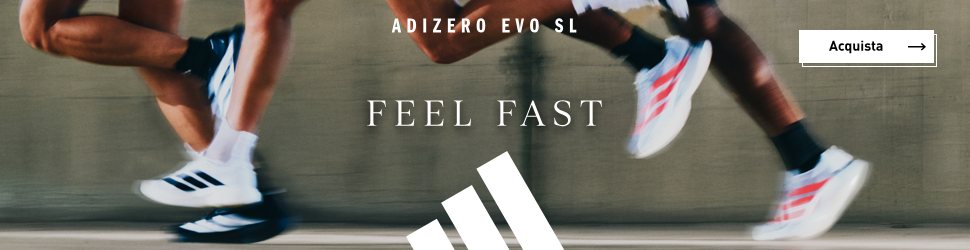


I’m not running today, but I’m dressed like I might.
Joggers, lightweight hoodie, mesh-upper shoes with high-performance soles. I look like I’m ready to crush a fast 10K, but truth is, I’m just out for a coffee. And if you think about it, I’m not the only one. Hop on the subway, walk through a plaza, or step into any coworking space: half the people you see look like they just finished a workout. Only they didn’t. And they won’t.
So how did the runner’s look end up becoming our everyday uniform?
A story that started with a tracksuit (actually, a hoodie)
There’s a before and an after. Back in the ’70s and ’80s, wearing sportswear outside of sports was almost provocative—think Run DMC’s adidas Superstars and the early street style of New York rappers. The message was clear: break the rules of “dressing properly” to express identity, rebellion, and belonging.
Then came comfort. In the ’90s and 2000s, street culture kept blending styles while sports brands began flirting with fashion. Nike dropped collabs with designers and artists, adidas brought in Yohji Yamamoto for Y-3, and techwear started showing up on runways right alongside tailored pieces.
It wasn’t just about dressing comfortably anymore: it was the beginning of sportstyle—the idea that the language of sport could become a daily style code.
Athleisure: not just a weird word to spell
The word “athleisure”—a mash-up of athletic and leisure—exploded in the 2010s, right as our habits were shifting. The gym became an extension of the workday, free time turned more dynamic, and working remotely meant you could dress “a little sporty” without needing to justify it.
According to designer Errolson Hugh (Acronym, Nike ACG), “functionality is the new luxury.”
That’s why technical materials like Gore-Tex, Polartec, or the featherlight foams in running shoes started showing up in the closets of people who’d never run a kilometer. Because they say something: they’re visual cues for an active life, a mindful style, a certain idea of streamlined efficiency—even in looks.
Running and design: when performance becomes “cool”
It’s no coincidence that the best-selling shoes of recent years were designed for running—and rarely used for it. On Running turned its tech-driven design into an urban cult object. New Balance rode the wave of retro running. Nike keeps reinventing the Air Max. And ASICS brought the GEL-Kayano line back to life with a fashion twist.
The endless collabs between sports brands and fashion houses sealed the deal. From Sacai to Comme des Garçons, from Wales Bonner to Ader Error, not to mention Gucci x adidas and Salomon x Maison Margiela.
The message is crystal clear: sport is the new language of luxury, and running is its most credible punctuation mark.
The one must-have piece for every runner (even in the city)
If you have to pick one item to build your sport-meets-street look, go with the shoes. The real-deal running sneaker—not the “inspired-by” kind—is the aesthetic core of this whole movement.
Make it lightweight, maybe in a neutral colorway.
You don’t have to run. It just needs to look like you could—any second now.
A new identity, even if you don’t run (but you could)
In the end, dressing like a runner even when you’re not running is a small act of self-reinvention. It’s like saying, “I might have just come back from a quick run,” or “I might head out for a few kilometers later.” Or maybe not. But that’s not the point. Because what you wear tells a story about you: active, fluid, always in motion.
Even when you’re standing still in line at the bakery.
It’s not just fashion. It’s a way of inhabiting your body, your space, and your time. And, if you look closely, it’s a quiet little statement of intent: this is who I am.
Even when I’m not running. But I could.