
Sitting for eight hours wears your body down. Here’s how to use yoga to undo the damage your desk does.
- Prolonged sitting mechanically shortens the hip flexors and closes off the chest.
- Yoga acts as a tool for reversing the damage caused by the chair.
- The goal is spinal decompression through gentle extension and rotation movements.
- Opening the shoulders and chest counteracts keyboard kyphosis and improves breathing.
- Stretching the psoas is essential for releasing chronic tension in the lower back.
- A consistent evening sequence supports muscle recovery and restores joint mobility.
How Sitting Affects the Lower Back
If you spend most of your day seated, you already know that a chair is a silent hydraulic press working on your spine.
When we sit, the pelvis is forced into either posterior or anterior tilt, and the load concentrates almost entirely on the lumbar vertebrae. The intervertebral discs — which should function as hydrated shock absorbers — get compressed. Over time, this constant pressure narrows the space between vertebrae, producing that heavy, dull ache that follows you through the end of the day. It’s no coincidence that the lower back is the first to complain: it’s the breaking point of a structure built to move, not to stay static.
Reversing the Posture: Opening the Shoulders and Chest
The problem doesn’t end at the base of the spine. Watch your position while typing or looking at your phone: the shoulders roll forward, the shoulder blades drift apart, and the chest closes in. It’s a defensive posture that shortens the pectoral muscles and stiffens the trapezius. Yoga steps in here by opening the shoulders and allowing you to breathe more freely.
Through positions like Cobra or simply clasping your hands behind your back, you can stretch the connective tissues that have adapted to this closed-off shape. Opening the chest isn’t just about standing taller — it’s about giving the diaphragm room to move freely. A closed chest forces breathing high and clavicular, needlessly stimulating the sympathetic nervous system and amplifying stress. Creating space in front gives the back a chance to decompress, finally letting the shoulders slide down away from the ears.
Gentle Movements to Restore Space Between the Vertebrae
A common mistake when you feel like your bones are locked together is reaching for a sharp movement — a liberating “crack” that doesn’t actually address the source of the tension. The spine needs space, not jolts. Using gentle floor-based twisting sequences lets you work the paraspinal muscles without loading the body’s weight onto the spine.
Think of your spine as a wet sponge that needs to be gently wrung to expel toxins, then released to absorb fresh fluid. Twists create this hydraulic “pumping” effect that brings nourishment back to the discs. Moving slowly, following the rhythm of the breath, signals to the nervous system that the threat is gone and that the muscles can finally release the protective contraction they’ve been holding all day in front of the screen.
Stretching the Hip Flexor Muscles
If your back is suffering, your hips are often the culprit. The psoas is the deepest and most powerful muscle in your core, connecting the lumbar vertebrae to the femur. When you sit, the psoas is constantly shortened. Over time, it “forgets” how to fully lengthen, and when you stand up, it pulls your vertebrae forward, creating an excessive lumbar curve that generates pain.

Low lunges or poses like Pigeon (Eka Pada Rajakapotasana) help release the back. Stretching the hip flexors means taking the leash off your lumbar vertebrae. It’s patient work — these muscles tend to hold a great deal of physical and emotional tension — but it’s the only way to restore the mechanical balance of the pelvis.
The Evening Sequence for Complete Muscle Recovery
Turning these concepts into practical use takes just fifteen minutes on the mat before dinner or before bed. Start with Child’s Pose (Balasana) to decompress the sacral area, move through a few cat-cow cycles to mobilize the spine, and finish with a deep psoas stretch and a floor twist.
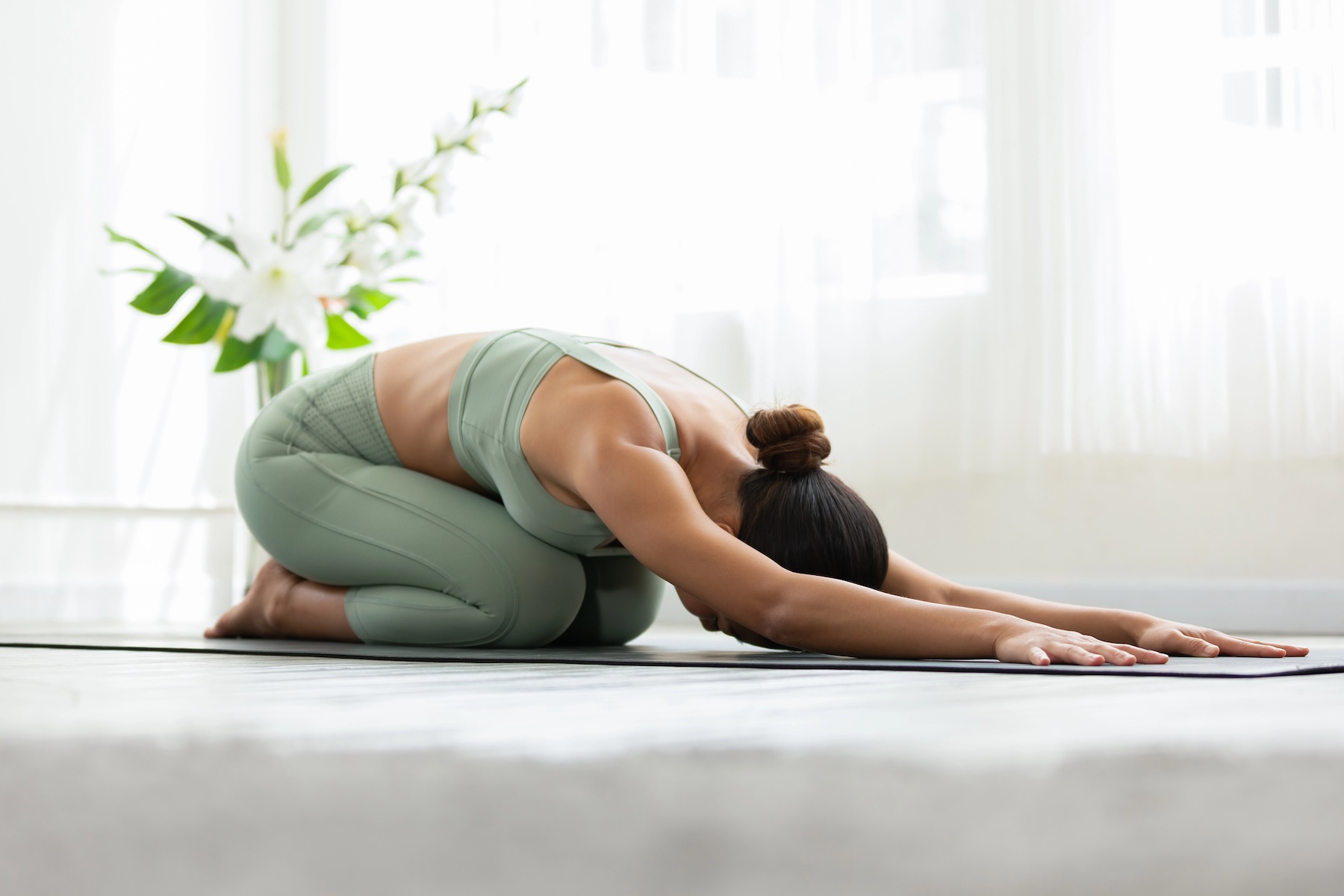
This routine supports muscle recovery in the truest sense: it restores the original length of the fibers the chair spent all day trying to shorten. When you get up from the mat, that Lego-brick feeling will be gone — replaced by something more human, mobile, and finally light.
SEO Title: Yoga for the Back: Exercises to Release Office Tension
Meta Description: Back locked up after work? Try this gentle yoga sequence to lengthen your muscles, open your shoulders, and relieve lower back pain.
WordPress Abstract: Maintaining a seated position throughout the workday causes severe muscular shortening, particularly in the hip flexors and back muscles. To neutralize these mechanical tensions, compensatory movements are essential. A short yoga practice targeting lumbar decompression and thoracic opening restores tissue hydration and reestablishes the spine’s natural mobility.
SLUG: yoga-release-back-pain-sitting-office
Potential: High (Targets office workers with postural issues)
Author: Martino Pietropoli
Publication date and time: 12/05/2026 – 07:15
Confidence level: High (Based on biomechanical principles and established yoga practice)
- Meta Description: .
- Title:
- Excerpts 1: Hours of sitting compress the vertebrae and shorten the psoas. Discover how a targeted yoga practice can reverse this mechanical damage, restoring space to your spine and freedom to your daily movement.
- Excerpts 2: The chair is your posture’s silent enemy. Through opening and decompression movements, you can reset your body after work, eliminate lumbar tension, and rediscover lasting, deep-seated wellbeing.
- Slug: