
Waking up the body with yoga before reaching for your smartphone transforms morning stiffness into fluid energy, gently reconnecting your mind and spine.
- The stiffness you feel upon waking is due to the compression of intervertebral discs and nocturnal muscle stasis.
- Checking your smartphone immediately triggers a digital cortisol spike that stresses the brain before you’ve even moved a muscle.
- Morning yoga acts as a natural lubricant for the joints, immediately improving your posture for the day ahead.
- All it takes is ten minutes of mindful movement to oxygenate the blood and trigger mental clarity.
- Deep breathing is the first step in telling your nervous system that the day can begin without a rush.
- The key isn’t the intensity of the practice, but the consistency of the ritual: a fluid body is a happier body.
The Beauty of Waking Up to Yoga
Morning anxiety—if you’ve ever experienced it—is a very normal biological response. Upon waking, your cortisol levels peak. It’s physiological, and there’s nothing strange about it. Think of it as your operating system’s activator: after the calm of sleep, the system shifts gears and prepares for the day. Simply realizing that everything is under control is a way to prevent that cortisol spike from turning into full-blown anxiety. Another way to smooth the transition from sleep to wakefulness is the method we’re recommending here—it’s incredibly simple and effective.
The Body at Wake-Up: Why We Feel Stiff
During the night, it’s not just cortisol performing acrobatics and changing concentrations. Physiology plays its part, too: our spine relaxes, but the intervertebral discs hydrate and swell slightly, while muscles, remaining immobile for hours, tend to lose the elasticity we need to navigate the world. It’s as if our body enters a “system safeguard” mode during sleep: everything stops, condenses, and stiffens. That feeling of being stiff as a board isn’t a sign of premature aging (though the thought does cross one’s mind occasionally); it’s simply the way connective tissues and joints tell us they need to be oiled. Imagine a bicycle left out in the rain: before you pedal away, you need to put some oil on the chain. Yoga does exactly that.
The Benefits of Moving Before Checking Your Smartphone
Reaching for your smartphone to immediately scan messages, emails, and news is a bad habit most of us have developed. When we do this, however, our minds are projected into a universe of notifications, deadlines, controversies, and the seemingly perfect lives of others. It’s a sensory assault that triggers a spike of unnecessary stress. Choosing to dedicate the first ten minutes of your day to movement means taking back control.
Moving your body before consulting the outside world allows you to establish an internal connection. Instead of reacting to digital stimuli, you act on your own physical structure. Your posture will thank you: a back that has stretched out on the mat will face the sedentary demands of the day with far more dignity.
Deep Breathing to Activate the Mind
We often think caffeine is the only way to wake up. In reality, what our brain desperately needs is oxygen. When we sleep, our breathing is short and shallow. Practicing a few minutes of yoga forces us to breathe mindfully. We’re not talking about exotic or transcendental techniques, but simply filling your lungs to the brim, feeling your ribs expand. This simple act sends an immediate signal to the nervous system: “Everything is fine, we’re ready.” It’s a sort of biochemical reset that clears mental fog far better than any double espresso, allowing you to reach breakfast with much greater clarity.
A Basic Routine to Loosen the Back and Shoulders
You don’t need to be able to tie your legs behind your head to enjoy the benefits of yoga. A very simple sequence is more than enough. Start on all fours with the classic “Cat-Cow” stretch: inhale as you gently arch your back, exhale as you round it, as if trying to push the ceiling away with your shoulder blades.
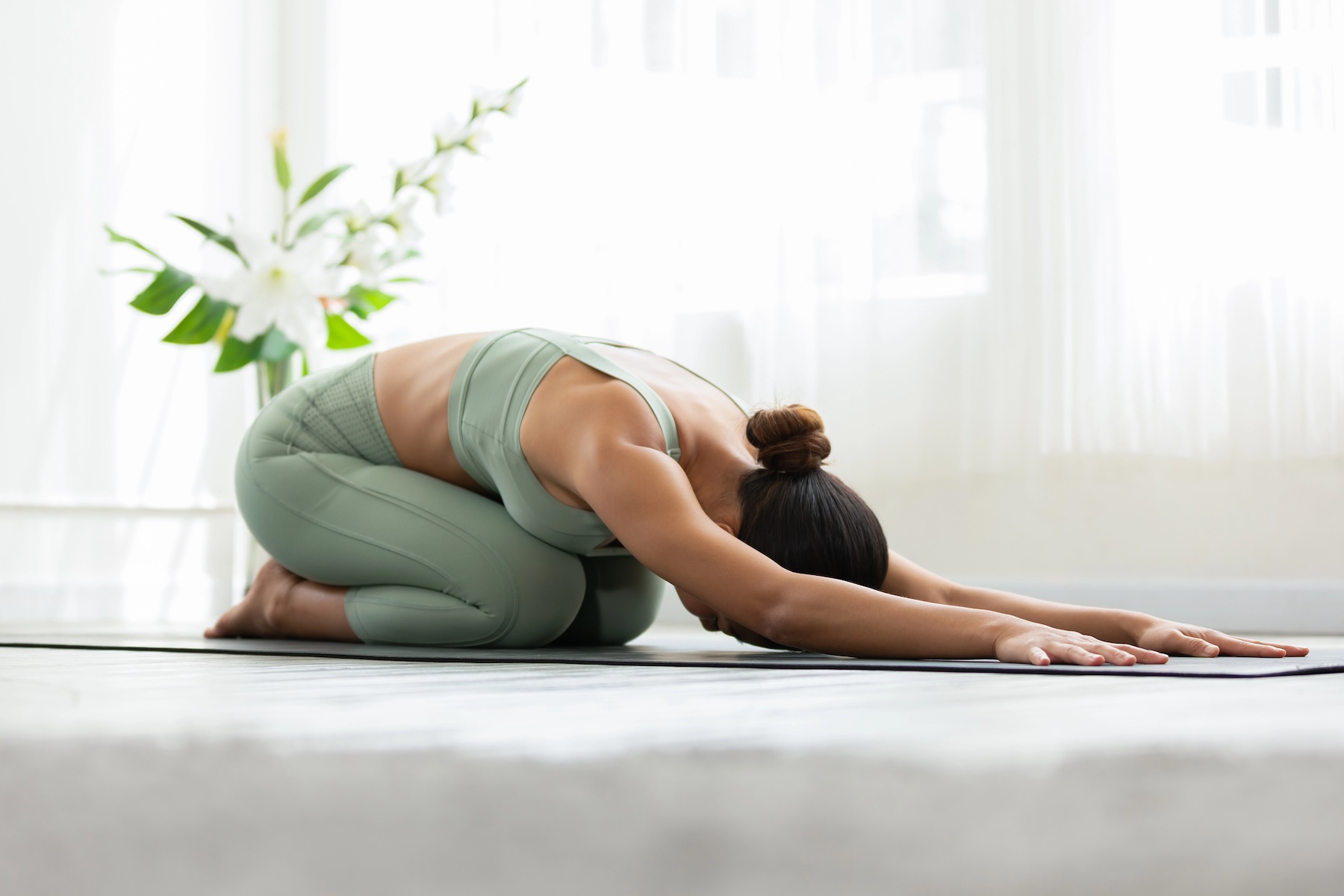
You’ll feel every single vertebra waking up and thanking you. Then, move into Child’s Pose, stretching your arms forward to release the shoulders, where we often accumulate the previous day’s tension. Follow up with a gentle seated twist: it helps “wring out” the internal organs and reactivates circulation. These are movements anyone can do, even in pajamas and with hair that looks like a bird’s nest.

Consistency Over Intensity
The secret of this practice doesn’t lie in the complexity of the poses or the duration of the session. Ten minutes every morning is worth far more than an hour and a half of intensive yoga once a month when the guilt finally becomes unbearable. The beauty of morning yoga is that it becomes a ritual—a small space for yourself before the world begins demanding your attention. It’s a low-effort, high-yield investment. Tomorrow morning, instead of looking for the snooze button, try rolling out of bed and taking a few deep breaths on the floor. Your 5:00 PM self—the one usually stuck between calls with a breaking back—will be profoundly grateful.