An investigation into the friction between body and concrete, from Portaluppi’s rigor to the tunnels of Dropcity. When form stops being decoration and becomes pure functional necessity.
Milan, during Design Week, is a city that suffers from a decorative obsession. Everything is exhibited, illuminated, saturated with meaning. Living rooms fill up with objects begging to be looked at. But there is a raw truth that concrete and asphalt know well: when you strip an object of its ornament, when you subject it to the ruthless law of gravity, only its function remains.
The structure remains.
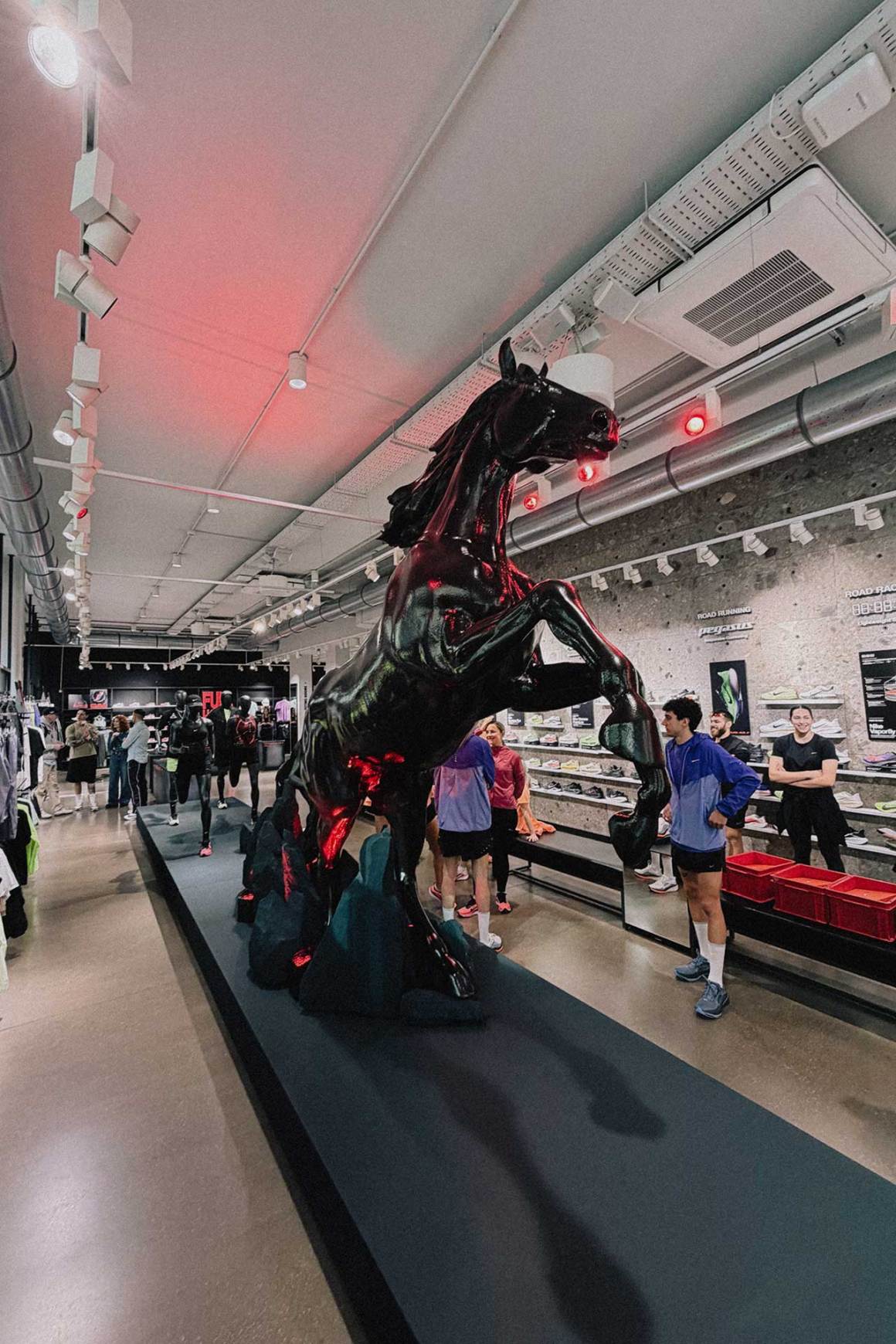
You enter the Nike Store in Corso Vittorio Emanuele and the first thing that strikes you is its grandeur. A black horse, sculptural, massive. The symbol of Pegasus. It stands in the center of the room like a monolith. It is a statement against the superfluous. In front of this sculpture, together with Bianca Felicori – architect and founder of Forgotten Architecture – we opened a conversation that barely touched upon sports, but rather on our relationship with time.
In 1896, Louis Sullivan coined the principle that would uphold the entire modern architecture: form follows function. He was talking about skyscrapers, of course. He was talking about how form had to emerge from purpose, never from aesthetics. When you pursue this utility obsessively, you reach a wonderful and astonishing point of no return. You arrive at beauty.
The geometry of evolution
The Nike Pegasus 42 has not been reinvented. It has been chiseled. After more than forty years of existence, the question underlying this dynasty remains the same: what does the human structure really need when impacting the ground?
The answer is not aesthetic, it is engineering. The introduction of a full-length curved Air Zoom unit, embedded in ReactX foam, is not meant to make you run faster in an abstract sense. It serves to guarantee you 15% more energy return with every step. It serves to give back what the road tries to take from you. And under the sole, the waffle pattern bites the Milanese asphalt. It has been there since the ’70s. Because pure function does not need to be replaced, if anything, it just needs to be refined and made more contemporary with modern materials.


And then there’s the color. The launch colorway hides a fierce, animalistic cultural intuition: Batesian mimicry.
In nature, harmless species copy the chromatic patterns of lethal ones to protect themselves. They wear red to simulate a danger they do not possess. Today, the urban landscape is full of silhouettes that simulate the proportions of speed and indulge its aesthetics. But mimicry stops at the surface. The Pegasus 42, on the other hand, guards the Air. Its red is not a copy. It is an explicit message.
Breath and concrete
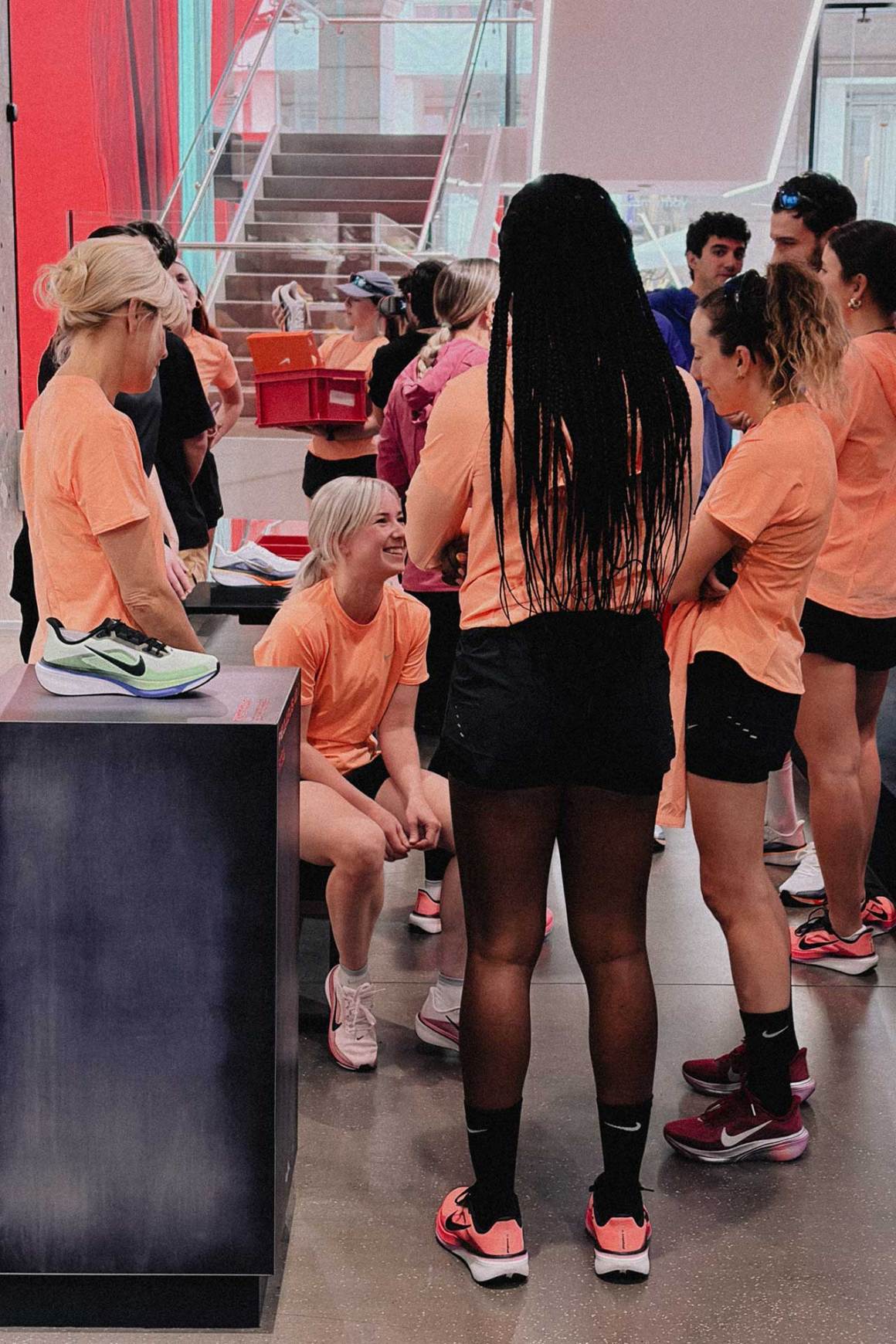
You step out of the store. The cold morning air fills your lungs. The Design Run begins.
You no longer look at the city, you measure it with steps amplified by the full-length Air Zoom unit of the Pegasus 42. Your heart rate rises. Broken sentences. Sweat cooling on your forehead. Running is the most honest way to read the urban planning of a place. You pass through the Portico of Palazzo Crespi. You brush past the gates of Villa Necchi Campiglio and the cultural grandeur of Portaluppi’s Planetarium.
The rhythm becomes constant.

Then, the Pirelli Skyscraper. Gio Ponti and Pier Luigi Nervi built a pure, tapered prism in 1958, without load-bearing walls on the facade. A structural rebellion that generated absolute elegance. As your legs grind out kilometers, you understand the parallelism between architecture and Nike design. The best objects, those designed to withstand time, share the same quality: they could never have had a shape different from the one they have.


NikeAir_Lab: air as an element of strength
You arrive at Central Station. You’re out of breath. You run alongside the vaults of the railway warehouses and the tunnels of Via Sammartini. You enter Dropcity.
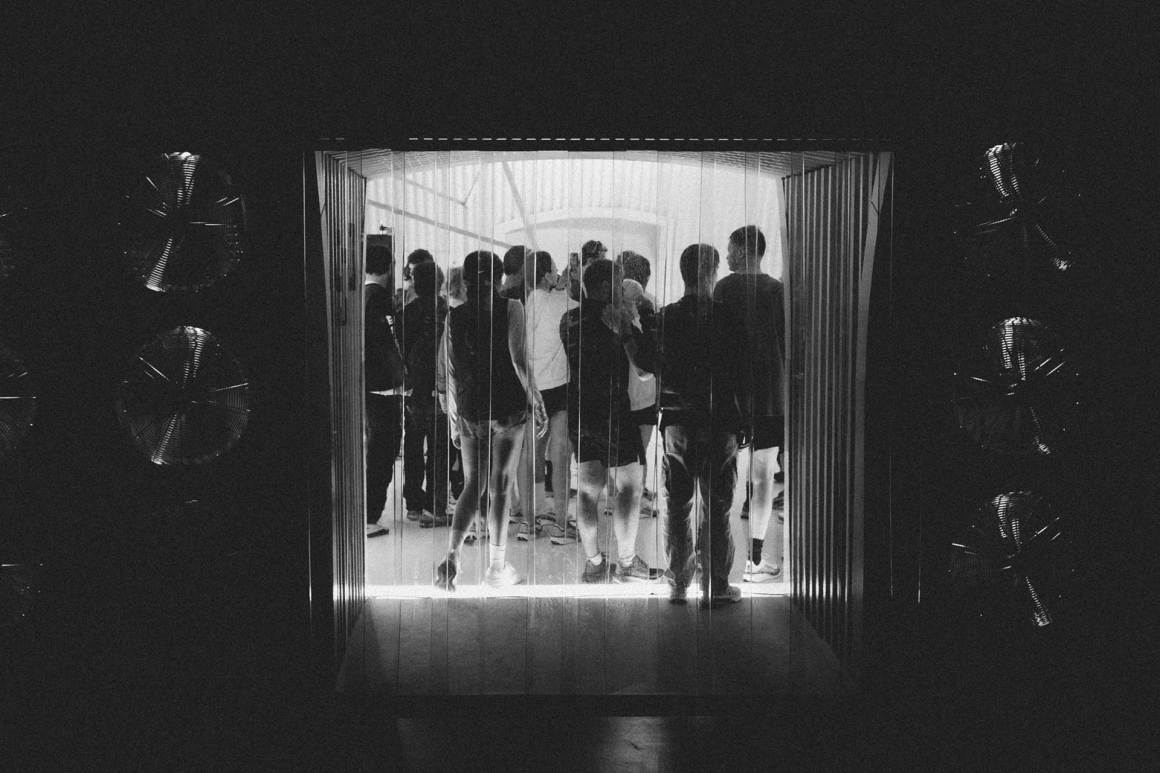
The noise of the street gives way to the industrial precision of the NikeAir_Lab. This is not a simple exhibition space; it is a living organism that earned a shortlist spot for the Fuorisalone Awards 2026 thanks to its ability to make the intangible tangible. Inside the tunnels hosting this world premiere, the invisible element that cushioned the steps of your last five kilometers is analyzed and celebrated as an elemental force.
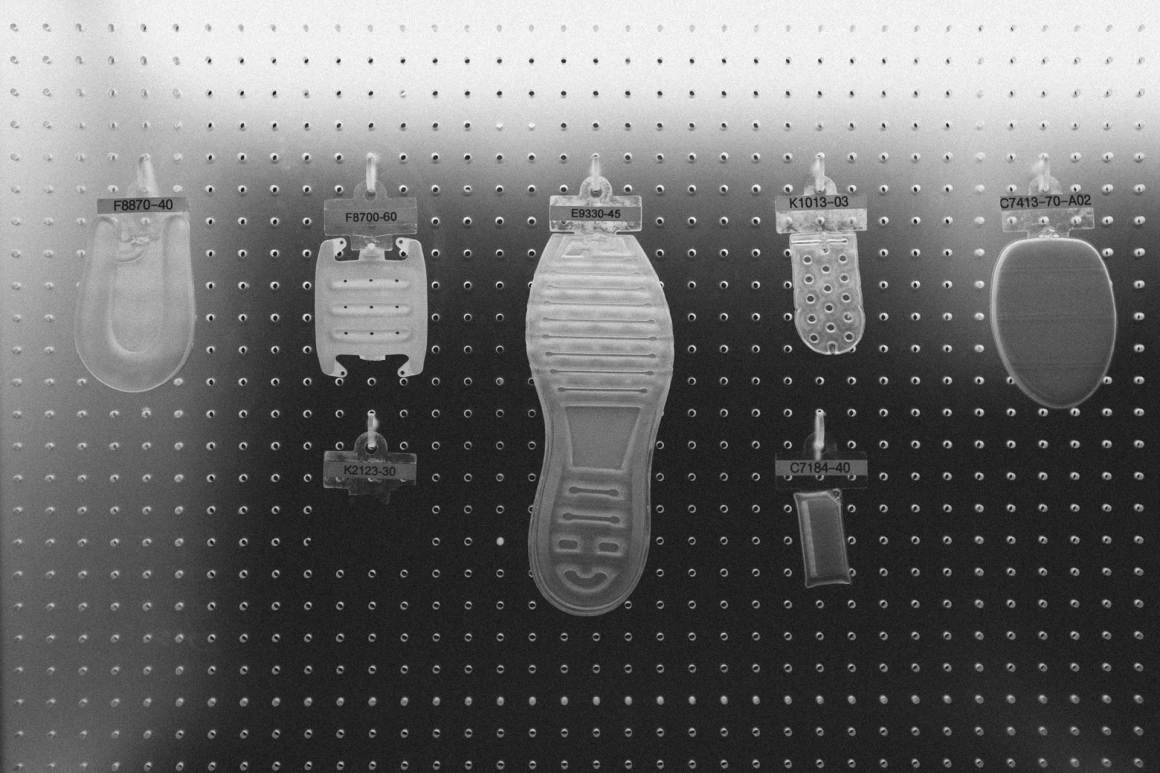
The experience is articulated through thematic tunnels that guide the visitor into the technological heart of Nike. Like in the Air Archives, a rare dive into the origins. Here you can observe the first experiments of Frank Rudy, the inventor who changed running forever, alongside the initial explorations for the Alphafly NEXT% and Faith Kipyegon’s Breaking4 speed suit. It is physical proof that innovation is not a flash, but an iterative process made of failures and insights, the same process that led to this latest version of the Nike Pegasus.


In the Air Library, the voices of athletes and visionaries like Arianna Fontana and Hiroshi Fujiwara activate a choral narrative on the cultural impact of air. But it is in the heart of the laboratory that the exploration of movement becomes craftsmanship, in its essentiality. Eight workstations, equipped with robotic arms, thermoforming machines, and pneumatic cylinder kits, transform air into a solid design medium. Each machine acts on a different aspect: visualizing air as proof, pumping it as expansion, calibrating it as an impulse, or hurling it as an impact force.
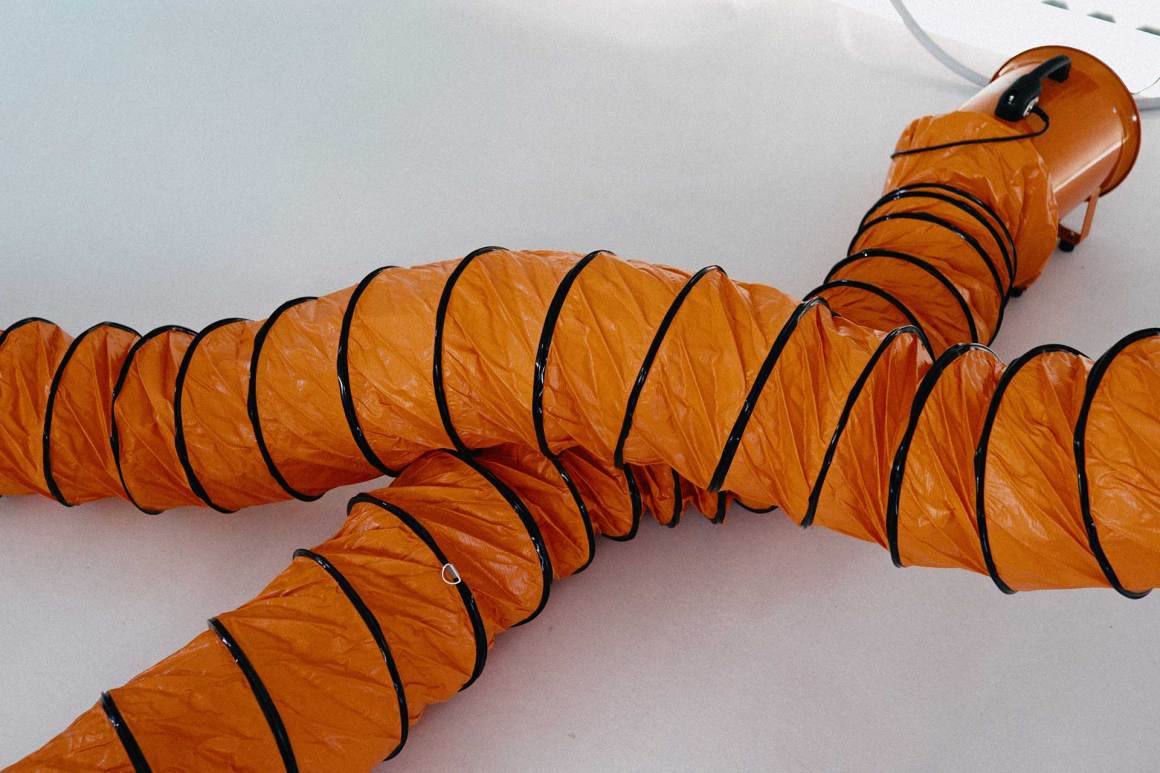
There is no room for abstract theory: the ethos of the laboratory is based on a culture of experimental and manual “making”. As highlighted by the Nike design team, prototyping is a daily practice, an instinct to test and refine in real-time. This approach is documented by nearly 100 never-before-seen prototypes, tracing the development of innovations like Air Liquid Max, FlyWeb, and Therma-FIT Air Milan. You look down at your feet and realize you are wearing the result of all this.
But the NikeAir_Lab is not an ephemeral event: at the end of Milan Design Week, the equipment will be transferred to various Dropcity locations to leave a tangible legacy for Milan’s creative community.
Exiting the tunnels of Via Sammartini, with the sweat now cold on you, you understand that design is not what you see in magazines. It is the invisible architecture that allows you to challenge the entropy of the day and move towards the next finish line.
We are left with the concrete. We are left with this precise moment.