
Let us start with a premise that will sound singular to many.
In order to register for a 100-mile race in the U.S., you do not always have to submit a sports record showing races you have run in the past; very often you can register for a 100-mile race even if you have never run long distances in your life.
However, one discriminator shared by almost all races is to have volunteered, for a duration that is usually 8 hours.
What is it all about?
Volunteering means all those activities aimed at conservation, trail cleaning, and aimed at the ultrarunning community. That is, everyone is happy that you are running and having fun, but why not put some elbow grease into it yourself?
It is normal for us Europeans to believe that the organization of an event is “separate” from those who attend, and therefore, in exchange for money, we expect services because we have paid for them. Which may have its logic, if we think of ourselves as consumers, but if we think a little bit out of the box and instead consider ourselves part of a movement or a community, the discourse changes, and a lot.
You can’t have perfect trails if no one cleans them. You can’t have aid stations full of people happy that you are there to run if the volunteers are only there in exchange for a T-shirt or worse yet, paid to attend. You can’t expect someone to organize the race as you have it in mind if you are waiting for it to be a body, an institution or necessarily a structured association to do it. If you ask me, I tell you unabashedly that it must be people who are passionate about something who organize events for a scene, not entrepreneurs just chasing business.
I would like to consider all the thousands of possibilities that can be used to do something for the running community, but in the meantime let’s start with one:
trail cleaning, or trail work.
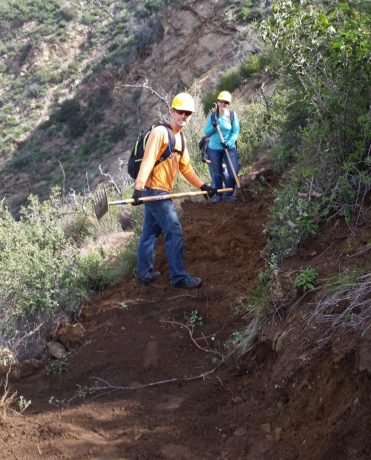
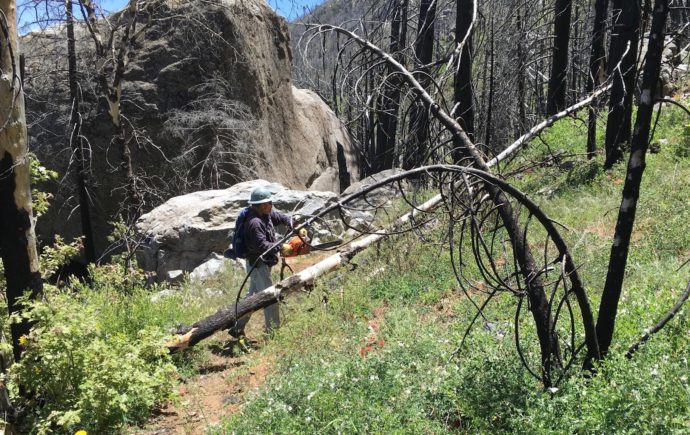
It’s all that trail safety and cleanup work that makes a trail exciting for runners, beautiful, smooth, and well-maintained. They range from removing fallen branches and trees on the trail with a chainsaw, to moving rocks, raking away leaves, putting back wooden walkways in fords, and, of course removing trash from the trail.
How do people do this volunteer work?
They can lean on local Rangers (who then certify their participation) or participate in the days that race organizations do before the event on the race trails.
Basically, we get together a bit among those who will be participants in the race, use the opportunity for a reconnaissance of the route, get to know each other, and spend a few hours together in nature doing what is needed.
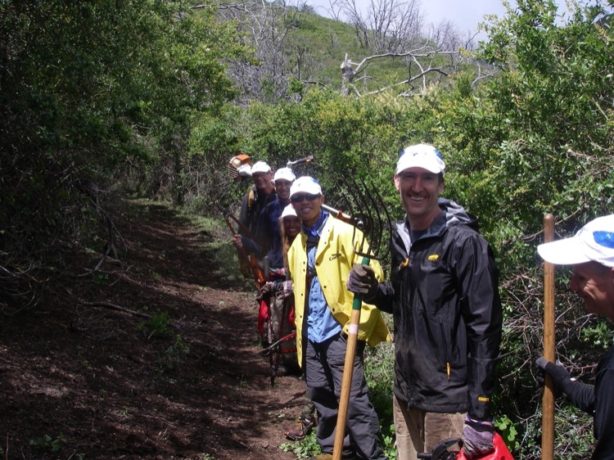
It is not hard to see that this kind of engagement tightens bonds in the running community, in addition to the effective help it has on trail protection. Think two hundred people (the standard of participants in American races) serving eight hours each. That’s 1,600 volunteer hours.
Now instead think that, of the ten thousand that run the UTMB each year, there is not one that does, by regulation, any trail work.
That would be eighty thousand volunteer hours per year, to say.
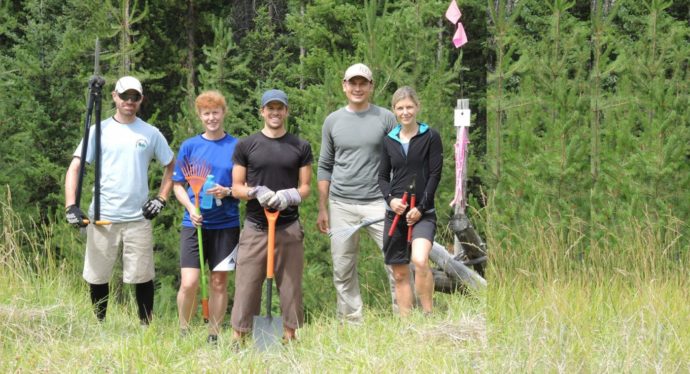
If really the path also becomes yours you are clearly more predisposed to respect it and why not, keep it clean. Maybe you think twice before throwing a piece of trash on the ground if you have spent many hours picking up other people’s trash. Simple, straightforward and logical.
As already mentioned, no race in Europe requires volunteer work, and we rely only on the predisposed bodies, Alpine clubs and organizers before and after races for this kind of work, but that is no excuse for twiddling our thumbs.
Talking is of little use, it is much easier to pick up a rake and slip on a pair of gloves, regardless of race regulations, and get busy for the racing community with a little elbow grease!