
Let’s look together at some exercises you can do to supplement, or when needed replace, your swimming workout. These are exercises that you can do outside the pool so “dry” to effectively stimulate the muscle groups involved in swimming. In swimming, with proper technique, strength development is useful for improving endurance and speed.
What are the most useful exercises to do?
The first exercises to be included are those dedicated to strengthening the “core” essential for strengthening in any discipline therefore also for swimming. Remember that strong branches (arms and legs) require a strong trunk. Always begin a strengthening session with activation of the trunk muscles.
The trunk is a very large area that includes the abdominal muscles, paraspinal muscles, quadratus lumborum, pelvic floor muscles, gluteals, and hip flexors. It is the part of your body to which everything is attached and from which you control every movement. Trunk conditioning is called functional training because it involves the muscles that help move the rest of the body. The basic exercises require no special equipment so you can do them from home.
Swimming-specific exercises you can divide into two groups. Those for the upper body and those dedicated instead to the legs.
In swimming, the technical and buoyancy aspects are critical to having a good performance. You can have all the strength in the world but if you don’t have good swim technique and proper buoyancy you will struggle a lot but a few meters. Your arms must have strength, speed and endurance to be able to pull and push your body through all phases of the swim. When the hand with the outstretched arm starts to catch the water and brings it toward the chest we are in the pulling phase. When the hand pushes the water from the shoulder toward the hip we are in the pushing phase. The aerial phase of the stroke is recovery.
What are the most important muscles in swimming? The deltoid works in all phases of the stroke. Gran dorsalis and biceps work during traction. Pectorals and triceps in the push phase.
As much as the propulsion of swimming is largely provided by the arms it can also be useful to devote some attention to the legs, which produce little propulsion but provide stability and trim in the swim. Legs don’t float much so if you’re not able to use them to the fullest they can become a burden to drag at the expense of your arms. You don’t have to train your leg muscles with the thought of increasing propulsion as much as to make your swim more effective overall.
The lower body muscles used during swimming are the gluteal muscles that work with the hip and back, the biceps femoris involved in hip extension, the adductors that help you keep your legs close together and aligned, the quadriceps used in knee extension, and finally the calves used to extend the feet and toes.
Let’s look together at a series of exercises you can do free-body to work on these muscle districts.
The exercises for the “core”
Combination Crunch
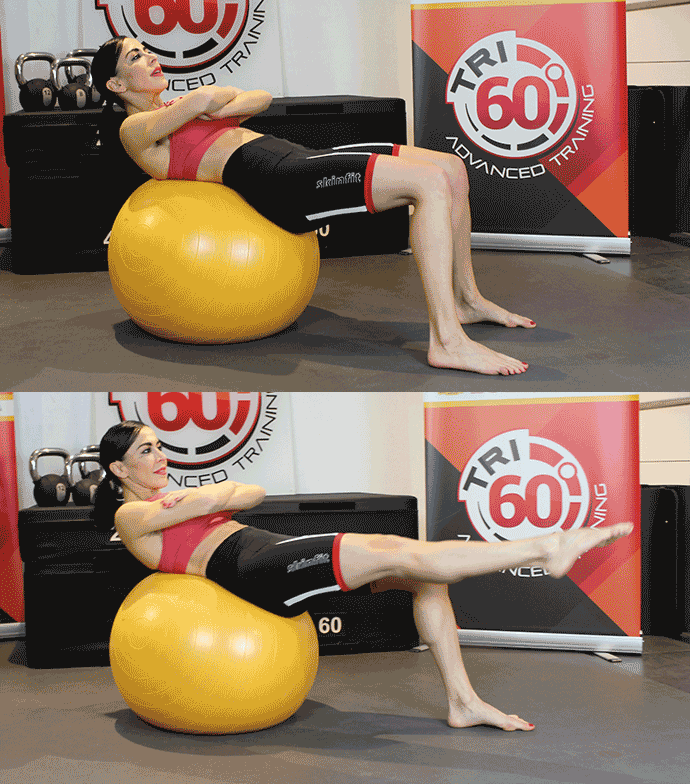
2/3 sets of 10/20 repetitions
Lie on a fitball face up so that the top of the ball is positioned under the curve of the Back, with feet resting on the floor. Cross your arms over your chest with your fingers touching your shoulders. Lift one of the shoulders and at the same time lift the opposite leg. Return to the starting position and do a repetition on the other side. Rest for 30 seconds between sets.
Stability Ball Bridge
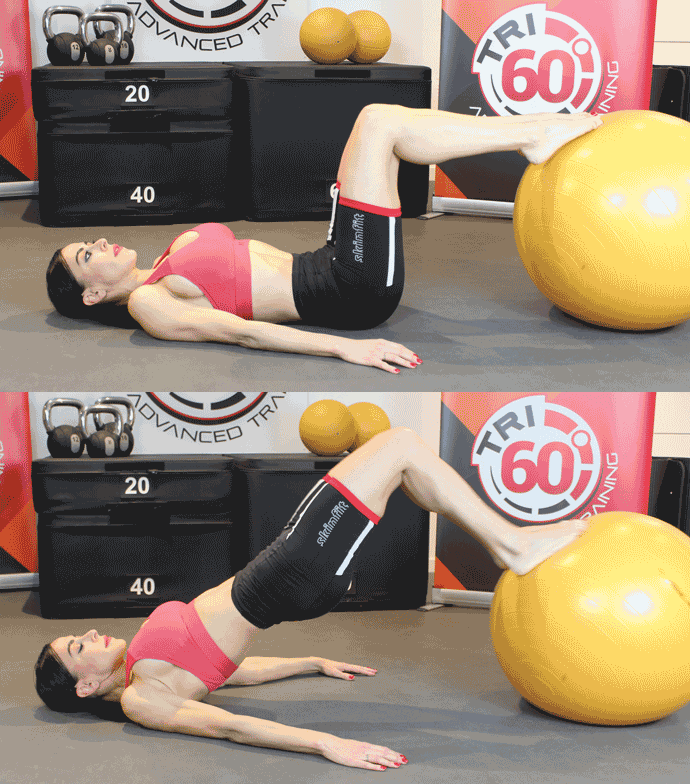
4 sets of 30/60 seconds.
Lie on your back with knees bent and feet flat against the top of a fitball. Rest your arms along your sides with your palms facing the floor. Push the ball with your feet to raise your hips until your body is in a straight line from your knees to your shoulders. Hold this position as long as possible for up to 1 minute, then relax back to the floor. Rest for 15 seconds between sets.
Mogul
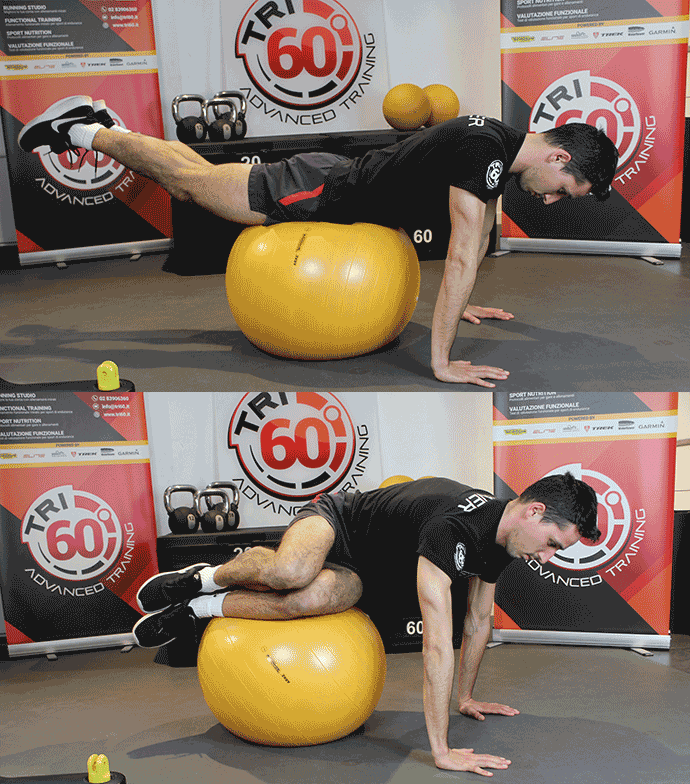
2/3 sets of 10/20 repetitions
Lie face down on the fitball and place your hands on the floor just below your shoulders with your arms extended. Keep knees and feet together with legs straight. Using your arms to keep your upper body in place, bring your knees closer to your chest as you rotate your hips so that your legs move to the right side and your left leg is the only part of you touching the ball. Return to the starting position by rotating your legs back under you and straightening them at the same time. Repeat this movement on the left side, bringing the knees toward the chest and rotating the hips so that only the right leg touches the ball. Continue until you have done 10 repetitions. Rest for 1 minute between sets.
Specific exercises for swimming: upper part
Slam Dunk (Deltoids, Dorsals, Triceps)

2 sets of 10/15 repetitions
The slam dunk is used to strengthen the stroke through the execution of a purposeful movement of the arms from top to bottom. Keep your feet aligned in line with your shoulders. Hold a medicine ball with both hands above your head with your arms outstretched. With a lot of force and speed throw the ball toward the floor. Release the ball when it reaches hip level. Repeat the movement for 10 to 15 repetitions per set. Rest one minute between sets.
Tubing Kickback (triceps)
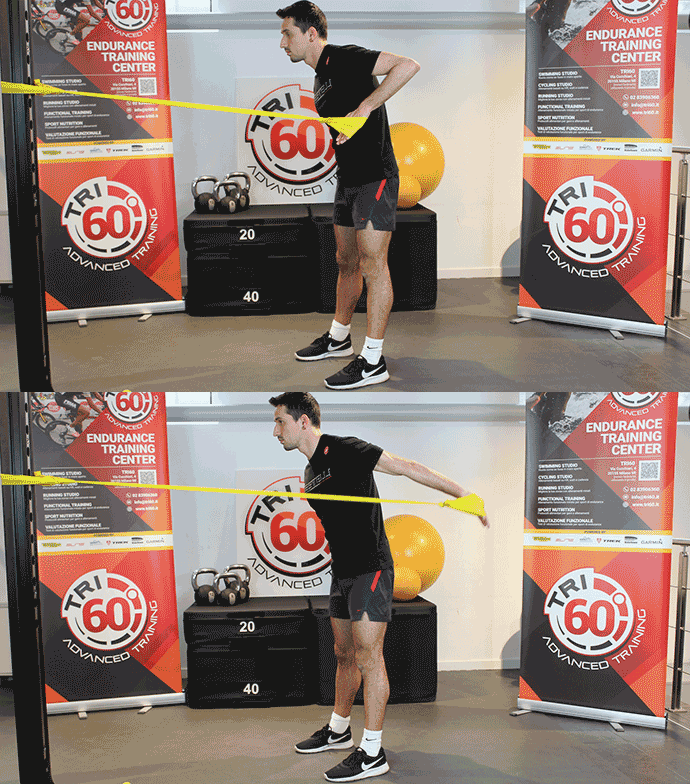
2 sets of 10 to 15 repetitions on each side
This exercise mimics the final phase of the stroke, the push. Use a rubber band anchored in front of you at shoulder height. Rest your free hand on your thigh. Bend slightly forward at the hips, keeping your back straight. Bend the arm holding the rubber band, raising the elbow until the upper arm is parallel to the floor. Shoulder and elbow should be at the same height. From this position, simulate the push phase to arm extension and then return to the starting position. It also controls the movement in the recovery phase of the exercise. Perform 10 to 15 repetitions, then switch sides to complete a set.
Squats (Deltoids, pectorals, triceps)
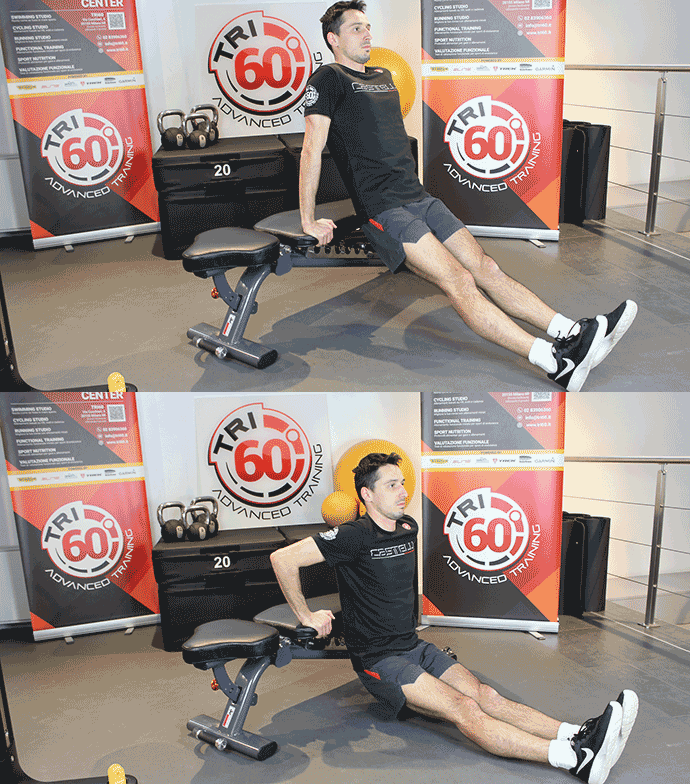
3 sets of 8/10 repetitions
Squats combine elbow extension from the triceps with shoulder flexion from the deltoids to increase the strength of your push-up phase. Use a flat bench and place your hands on the edge of the bench with your palms facing forward. Keep your arms outstretched and slide your legs straight out in front of you until you are in a bridge position. Slowly lower your hips toward the floor until your shoulders and elbows are at the same height and your upper arms are parallel to the floor. Push upward to return to starting position with arms outstretched. Complete 3 sets of 10 repetitions. One minute recovery time between sets.
Specific exercises for swimming: upper part
Lateral lifting. (gluteus medius)

2 sets of 10 repetitions per side
This exercise works the gluteus medius responsible for lifting the leg and stabilizing the gluteus maximus during hip extension. Training this muscle is to prevent the legs from tilting to the sides. Attach a rubber band at a point near the floor by tying the other end to the ankle. Stand so that the leg you will be working on is furthest from the anchor and the rubber band stretches out in front of your body. Keep your body as straight as possible while lifting your leg sideways. Do not move the leg forward or backward. Slowly return to starting position and repeat. Then switch sides and do the same number of repetitions.
Superman on fitball (great gluteus, hamstring)
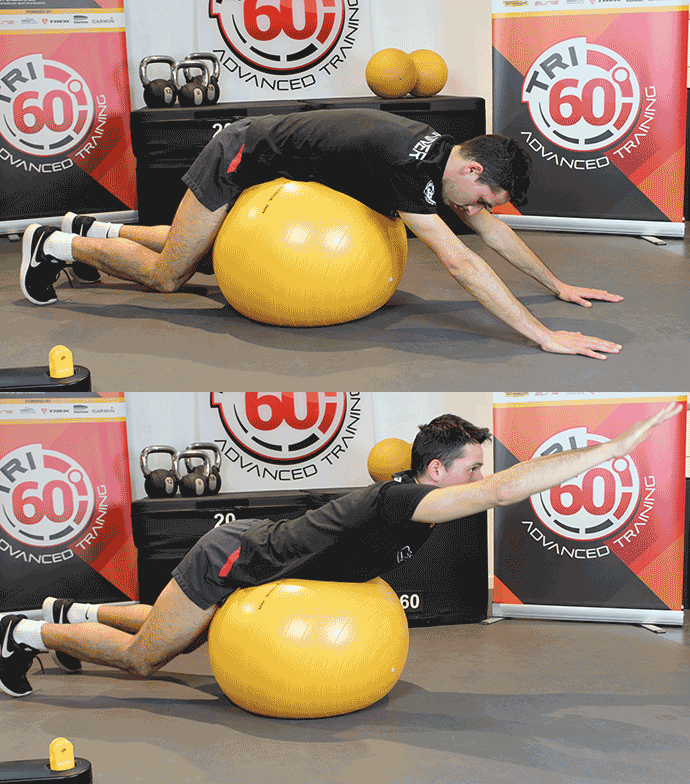
2/3 sets of 10/15 repetitions
An exercise to strengthen the great gluteus and hamstring to make hip extension more efficient during the gambit. Lie face down on your fitball anchoring your feet between the floor and the wall placed behind you. With legs well spread, place the fitball at waist height with the head remaining lower than the hips. Arms are stretched forward and resting on the floor. Lift your upper body off the ball as high as possible. The upper legs and hips remain resting on the ball. Important to take care of the contraction of the buttocks. Then slowly return to the starting position. Repeat for 10 to 15 times per set. If you want a greater load, hold a medicine ball in your hands.
Hip extension with elastic band (great gluteus, biceps femoris)

2 sets of 10 repetitions per side
This exercise allows you to exactly simulate the movement made with your hip during swimming. Anchor one end of the elastic band at a point near a wall at floor level and the other at your ankle. Looking at the wall, take a step back until your arms are extended and the cable is taut. Keep your body straight with all your weight on the leg resting on the ground. Keeping the other leg straight, push it back as far as possible. The movement is limited, but if done well, it guarantees you the contraction of the buttocks. Slowly return to the starting position. Switch legs and do the same number of repetitions on the other side.
Cross lateral extension with elastic band (adductors)
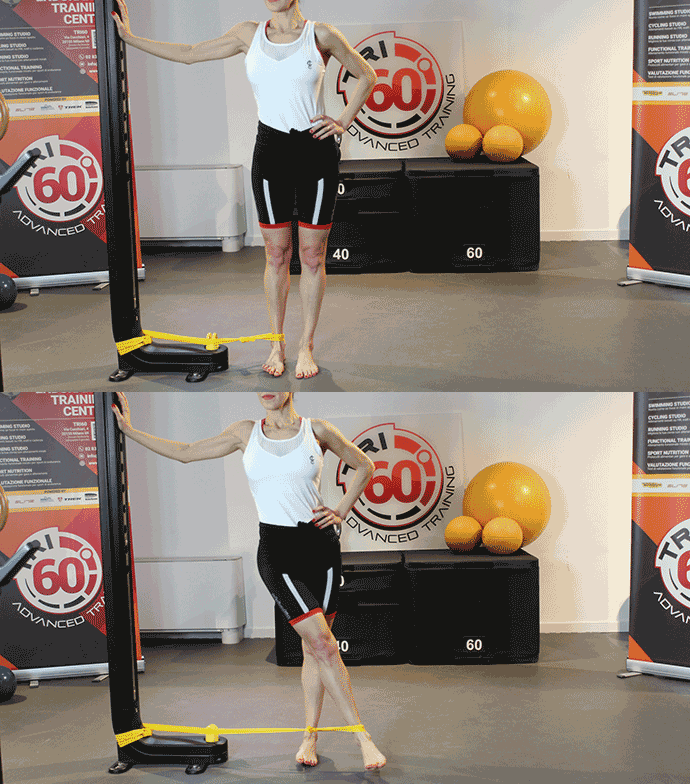
2 sets of 10 repetitions per side
A useful exercise to improve gambit control and efficiency during swimming. Attach a rubber band at a point near the floor by tying the other end to the ankle. Stand so that the leg you will be working on is closest to the anchor and the elastic stretches out in front of your body. Keep your body as straight as possible while moving your leg sideways until it passes in front of the one resting on the ground. Do not move the leg forward or backward. Bring the leg back slowly and repeat. Then switch sides and do the same number of repetitions
Lateral lunge (gluteus, hamstring, quadriceps)
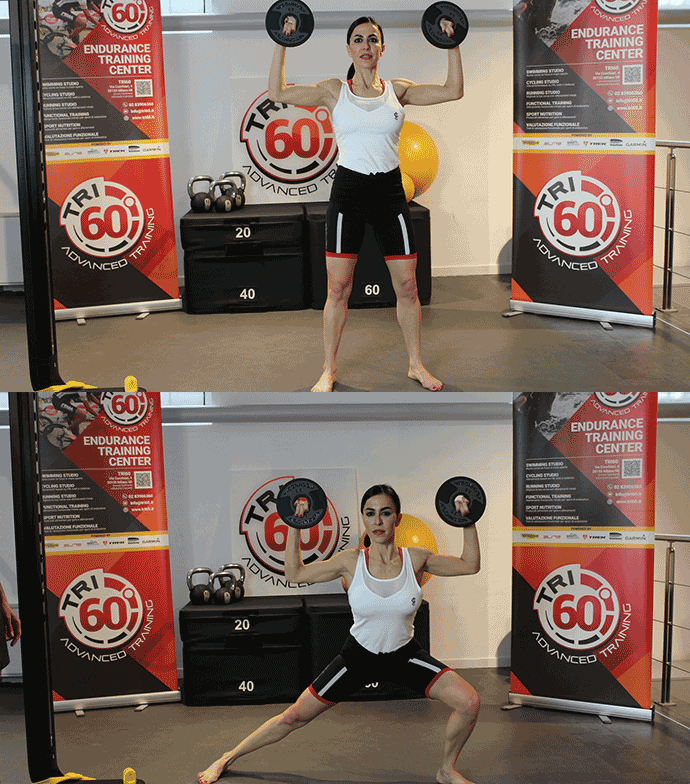
2 sets of 10 repetitions per side alternating
This exercise has a very important eccentric component involving the major leg muscles. It replicates several movements used in swimming and is therefore one of the most complete exercises for the swimmer’s legs. Start with your feet slightly apart and place your hands on your hips. Take a very wide side step while keeping your foot still in support. When your foot lands, put all your weight on that side by bending your knee. Go into lunge until thigh is parallel to the floor. The supporting leg should remain extended. Push energetically to rise from the lunge and return to the starting position. Repeat the lunge on the other side and alternate repetitions from one side to the other until you have completed the set. In the lunge, do not allow the knee to move laterally beyond the toes and the heel to rise off the ground.
Prone extensions (buttocks)
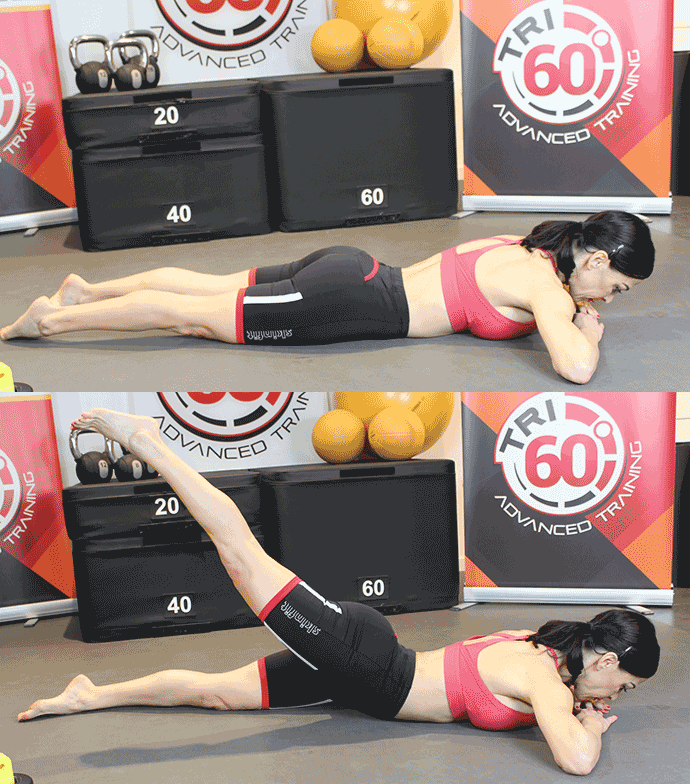
2 sets of 15 repetitions per leg
Lie face down on the floor. Rest your chin on your folded arms for added comfort. Bring your feet together with your legs well spread and your toes pointing toward the ground. Keep one leg on the floor while lifting the other leg as high as possible without lifting the hip off the floor. Contract your glutes to keep your leg elevated for at least 3 seconds. Then lower your foot to the floor, but as soon as it touches, raise it again. Do not rest between repetitions. Switch to the other leg and complete the same number of repetitions.
You can also find a video where I explain these exercises. Here it is.
(Main image credits: alfonsodetomas on DepositPhotos.com)