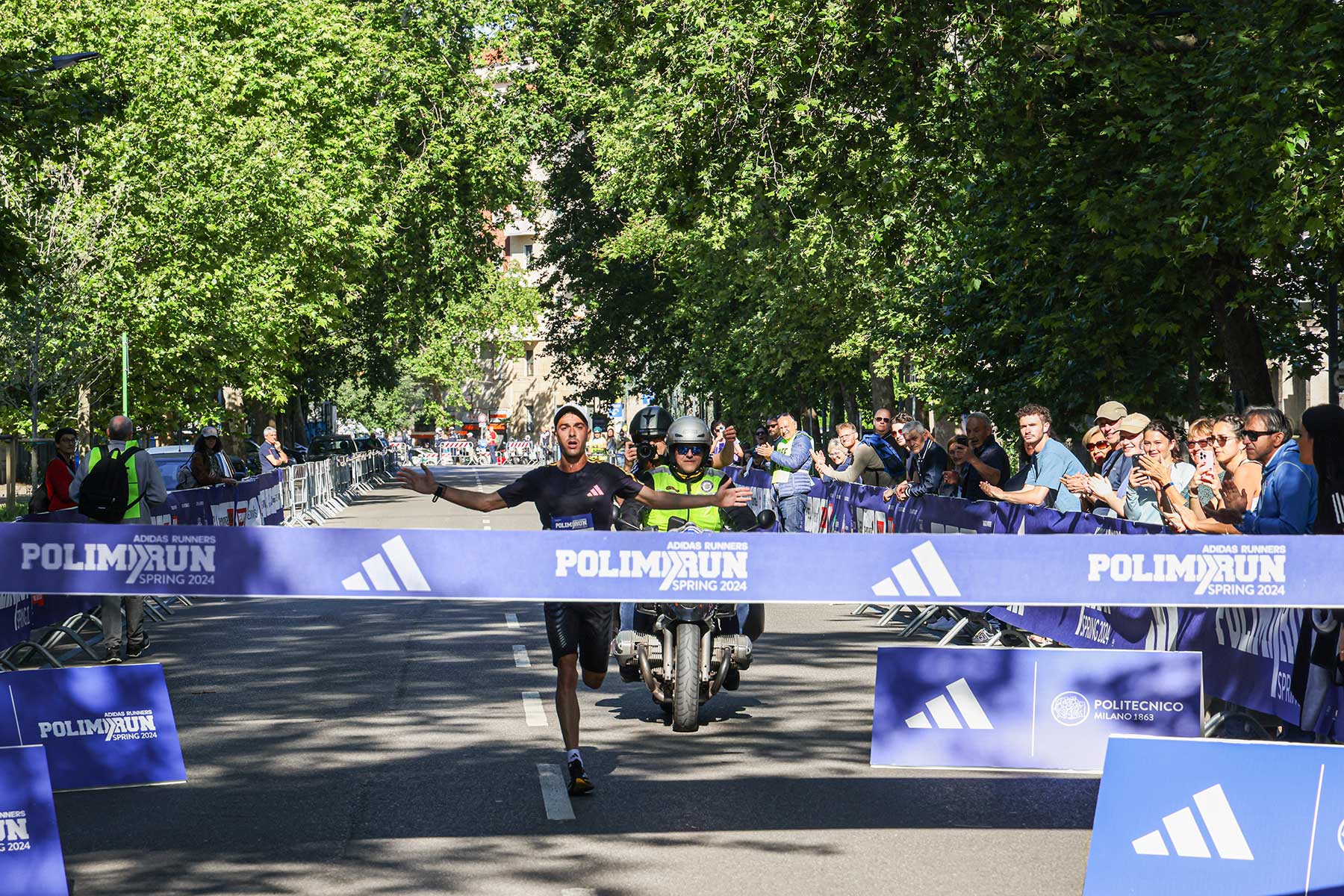
The PolimiRun on May 25 is a great opportunity to talk about 10Ks—the perfect distance to test both your determination and endurance. It’s a young race, relatively short, and packed with energy and excited people. In short, it’s a party. But to really enjoy the celebration, it’s best to arrive in your best shape. Getting ready for a 10K takes more than strong legs—it takes a well-thought-out strategy. Here’s how to build a solid training plan and the smartest tactics to manage your energy on race day. (And yes, a few tips on the best shoes to carry you to the finish line.)
The training plan: a winning structure
A good 10K training plan (like for PolimiRun) should balance volume and intensity to get you peaking at the right time. Here’s a weekly structure that gradually increases intensity as race day gets closer:
Phase One (Weeks 1–3): Building your base
- Monday: Rest or light activity like stretching or yoga to recover from the weekend sessions.
- Tuesday: Easy run (3–4 miles) to build aerobic endurance.
- Wednesday: Light strength training focused on core, legs, and glutes.
- Thursday: Shorter run (2–3 miles) at a moderate pace to improve aerobic efficiency.
- Friday: Rest day or very light activity.
- Saturday: Long slow run—start at 5 miles and work up to 6–7 miles by the end of week three.
- Sunday: Cross-training (like swimming or cycling) for about an hour. It helps reduce impact while keeping you active.
Phase Two (Weeks 4–6): Speed and endurance boost
- Monday: Rest.
- Tuesday: Interval training. Example: 5×400 meters at race pace with 400 meters recovery jog or walk between each rep.
- Wednesday: Recovery run, around 3 miles at an easy pace.
- Thursday: Tempo run (around 4 miles) at a steady, controlled pace—slightly faster than race pace.
- Friday: Rest.
- Saturday: Long run, gradually increasing distance up to 9–10 miles.
- Sunday: 45 minutes of cross-training.
Phase Three (Weeks 7–8): Taper and sharpen
- Monday: Rest.
- Tuesday: 4×500 meters slightly faster than race pace with full recovery between reps.
- Wednesday: Easy 2.5-mile run.
- Thursday: Short tempo run (around 3 miles) at race pace.
- Friday: Total rest.
- Saturday: Final long run (5 miles) one week out, plus an easy 2-mile jog two days before the race.
- Sunday: Race day.
Remember: adaptation is everything. Listen to your body and adjust training volume and intensity based on how you’re feeling and your current fitness level. The goal is to hit the start line feeling fresh, confident, and ready to give your best. 
Race strategy: pacing and energy management
On race day, pacing is key. Going out too fast is a common mistake that can come back to bite you in the second half. Try to start at a pace you’re confident you can maintain—maybe even a bit slower at first—then gradually pick it up.
Also, don’t underestimate the importance of hydration and fueling, especially if it’s a warm day. Even if 10K might feel “manageable,” staying hydrated can mean the difference between finishing strong or struggling through those final miles.
The right shoes for training and race day
Shoes can play a big role in how your run feels—and how you perform. The adidas Supernova Rise 2 is a great choice for training: they give you that “running on velvet” sensation, but still have the grip and responsiveness to push off efficiently. Just make sure you’ve broken them in well before race day so they feel like trusted running partners—not strangers.
Ready to run!
With the right training plan, a smart race-day strategy, and the right shoes, you’ll be showing up to PolimiRun not just ready to run—but ready to enjoy every step and hit your goal. Every race is a chance to better understand your body and what it’s capable of.
Good luck—and see you at the finish line!