
There is no doubt about the importance that technology has assumed in our lives in the past 10 years. Starting with smartphones to, more recently, smartwatches, the ways in which we can improve our lives as ordinary citizens and our lives as sportsmen and women are increasingly numerous.
Perhaps the most significant news is that, thanks to the ever-increasing miniaturization of the components of the “smart objects” we wear, the things we can put on us are no longer limited to smartwatches alone.
Indeed, today it is possible to have, even at all-too-reasonable prices, socks, T-shirts, shoes and whatever else designed with the intention of reading our physical data and, through specially designed apps, telling us how and what we can do to improve our physical condition.
In short, there were originally smart/active trackers/watches, but now technological evolution has allowed their components to become smaller and smaller to the point where they can be applied to technical clothing and shoes in little or no intrusive way, leaving us free to focus only on training. After all, that’s what technology is supposed to do, right?
What to wear (besides the smartwatch)
What are the sensors, accelerometers, optical readers and whatnot for? To provide us with data on our physical condition during the day or during training. There are many parameters that can be read nowadays: heart rate, step cadence, strokes during swimming, distance, pressure with which the foot lands, side skids, etc. etc. Why is it important or at least interesting to collect all this data? Because they help us to improve ourselves in running and in training in general, to get to the point of shaping our fitness more and more precisely.
One can also understand these technological assistants as silent coaches (although the role of the human coach remains irreplaceable) who study our setup, our strengths and weaknesses, and help us through the interpretation of data to improve ourselves.
What does the market offer today? Assuming that not all are available in Italy, here are some examples.
The smart mesh

The T-Shirt with integrated heart rate sensor is not new. Decathlon introduced one years ago, the Kiprun Cardio: it had a built-in sensor and allowed through the dedicated app to read one’s heart rate without wearing bands (it no longer appears in the catalog now).
The American MYZONE® makes one that is conceptually similar: it is called a Compression Shirt and can be used as a regular tee or “turn it on and make it a heart activity reader as well by attaching the dedicated sensor (sold separately) that pairs with the iPhone or any Android smartphone. Note that this type of mesh needs to be very tight to allow the sensors to be in contact with the skin, so these are compression products. The shirt costs $69.99 and the sensor $89.94.
Motiv Ring Fitness Tracker
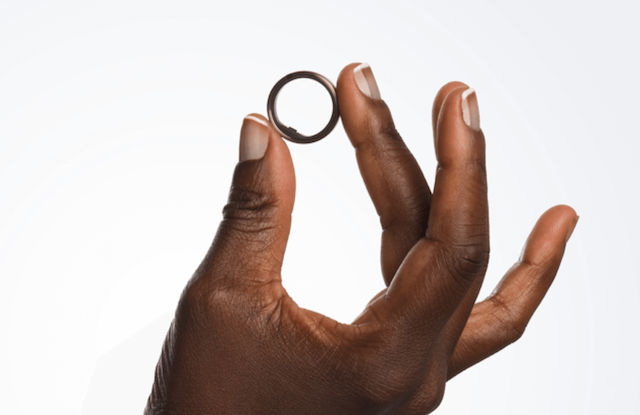
It’s hard to imagine a less cumbersome tech assistant than this one: it’s a sensor-enabled ring that can track parameters such as calorie consumption, steps taken, heart rate and sleep analysis. It also charges with a special adapter from your computer’s USB or Type-C socket and has a memory that collects data for 3 days. It syncs both Bluetooth with your smartphone where a dedicated app allows you to read the data collected.
One final tidbit: if you rotate it around your finger it will activate a function similar to Find My iPhone and make it ring, in case you can’t remember where you put it.
The cost? 200 dollars.
Sensoria Smart Socks and Sensoria Core

These socks will certainly leap to the top of the most expensive in your collection: to get them you have to pay $200 but in return you will have a very accurate reading of your cadence, speed, power with which you land, as well as an analysis of your stroke setting, which is useful to see if it is correct and to modify it, if necessary.
Under Armour HOVR Infinite
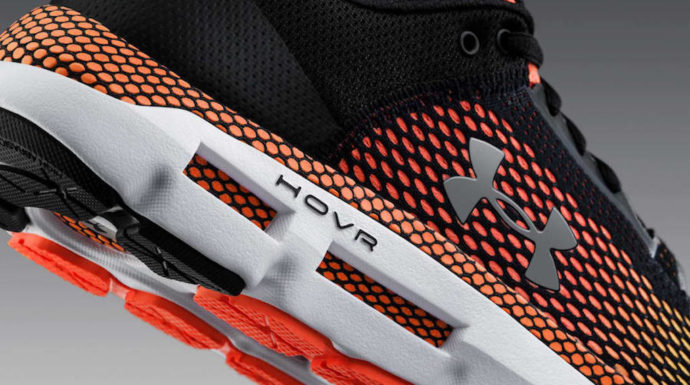
Thanks to the built-in Record Sensor™, the Under Armour HOVR Infinite collect as you run data such as cadence and stride length, distance and time. These are key metrics to let you know if and where you can improve your running efficiency. At a price of 140 euros.
(Inspired by Outside)