
SinceFebruary two thousand and twenty, our lives have been – willingly or unwillingly – tied to the progress of the pandemic due to SARS-Cov-2 and its evolution, to the limits that have been imposed for health protection and, in some cases unfortunately, to the aftermath that the infection brings once the acute phase has passed.
For runners (but for all athletes in general), the study of this aspect is constantly evolving, and there are a large number of researchers who are dedicated to collecting and analyzing data on the impact of CoViD-19 on the performance of athletes-whether elite or amateur-because simply getting over the disease in its acute and most obvious form may not be enough (spoiler: indeed it is) to resume athletic activity at the level one had prior to infection.
WHAT THE STUDIES HAVE FOCUSED ON
Since last year-when the restrictions due to the pandemic began to ease, albeit with the limitations imposed by individual countries-the attention of sports medicine researchers around the world has focused on understanding how and when an athlete’s body can return to the condition it was in prior to SARS-Cov-2 infection. In numerous studies, two groups have been created, as is usually done in such cases: athletes affected by CoViD-19 and non-athletes affected by CoViD-19, and several so-called parameters were recorded for each of the two groups. index which serve, precisely, to indicate the health condition of the person in question. Several studies also subdivide athletes into amateurs and elites to further highlight any differences between recovery time and the effects of disease on an ordinary runner’s body and a professional (or otherwise high-level) one.
Without going into too much technical detail about the data analyzed (this is extremely interesting stuff for those who study it, but perhaps a bit boring for those who read it), there were basically three main issues that emerged in many of the studies considered that needed to be addressed, two physical and one psychological.
As for those of a physical nature, in the first place is, of course, the time for the recovery of lung activity, which varies according to the degree of development of the disease and consequently determines the recovery of the affected person’s normal activities. For those who have been affected by CoViD-19 in a mild or asymptomatic form, in fact, with remission of symptoms there will be an increase in respiratory capacity, and the return to normal lung capacity
at rest
is usually set in a couple of weeks after complete disappearance of symptoms. The timeframe is lengthened – and by a great deal – for those who have been affected by the disease in a severe form (but who have not been hospitalized or subjected to artificial respiration), who will have to wait, from the disappearance of symptoms, more than a month and a half or two before they have a full return to lung capacity at rest, provided that the pneumonia has not created adhesions that would further complicate matters.
The second major physical component affected by the disease is the heart. Our most important muscle, in those affected by CoViD-19, is challenged both in those who are more severely affected by the disease and those who overcome it with mild symptoms. In fact, because of respiratory problems, the cardiac effort required to get oxygenated blood to the organs is stretched to the limit, and inflammation of the heart, called myocarditis, has been found even in clinically recovered individuals, which could affect regular cardiac activity to a greater or lesser degree depending on its intensity. In this respect, complete remission does not have a well-defined time range and depends largely on the affected person’s ability to recover from inflammation. For those with concomitant diseases, such as diabetes, the risk is higher and the recovery time very long. Compared with the pulmonary component, however, in the absence of other diseases, myocarditis-related problems are much less frequent, and the chance of encountering them, for a patient who has overcome the disease, are less than 0.3 percent: that is, only three people in a thousand might experience symptoms. This is a very low percentage, but still worth considering.
What could be seen, in the comparison between athletes and non-athletes, is that In the resumption of normal activities daily the physique of an athlete (amateur or elite does not matter) responds more quickly than a non-athlete for both physical components, which is definitely a plus point for physical activity.
THE PSYCHOLOGICAL COMPONENT
The other index identified is that of the mental health, mental health, which in people affected by all forms of the disease and more so in those who are moderately or severely affected often leads (according to some studies in almost half of the cases) to develop a form of social phobia and almost rejection for resumption of activities. In many cases, those who are severely affected by the disease and recover are nonetheless afraid of being affected again or of being able to act as a carrier of the virus to other people, and therefore try to limit contact to a minimum, including-especially-with loved ones and co-workers and teammates (in case they are athletes). Even for this index, there is no well-defined recovery time, and figuring out how to solve this issue is perhaps the aspect that should be focused on the most, since in many studies it is pointed out that this social distress (social adversity – as it is defined) indiscriminately affects not only athletes and non-athletes affected to any degree by the disease, but also members of the so-called control groups, that is, people not affected by the disease who were monitored to have an additional yardstick to process the data.
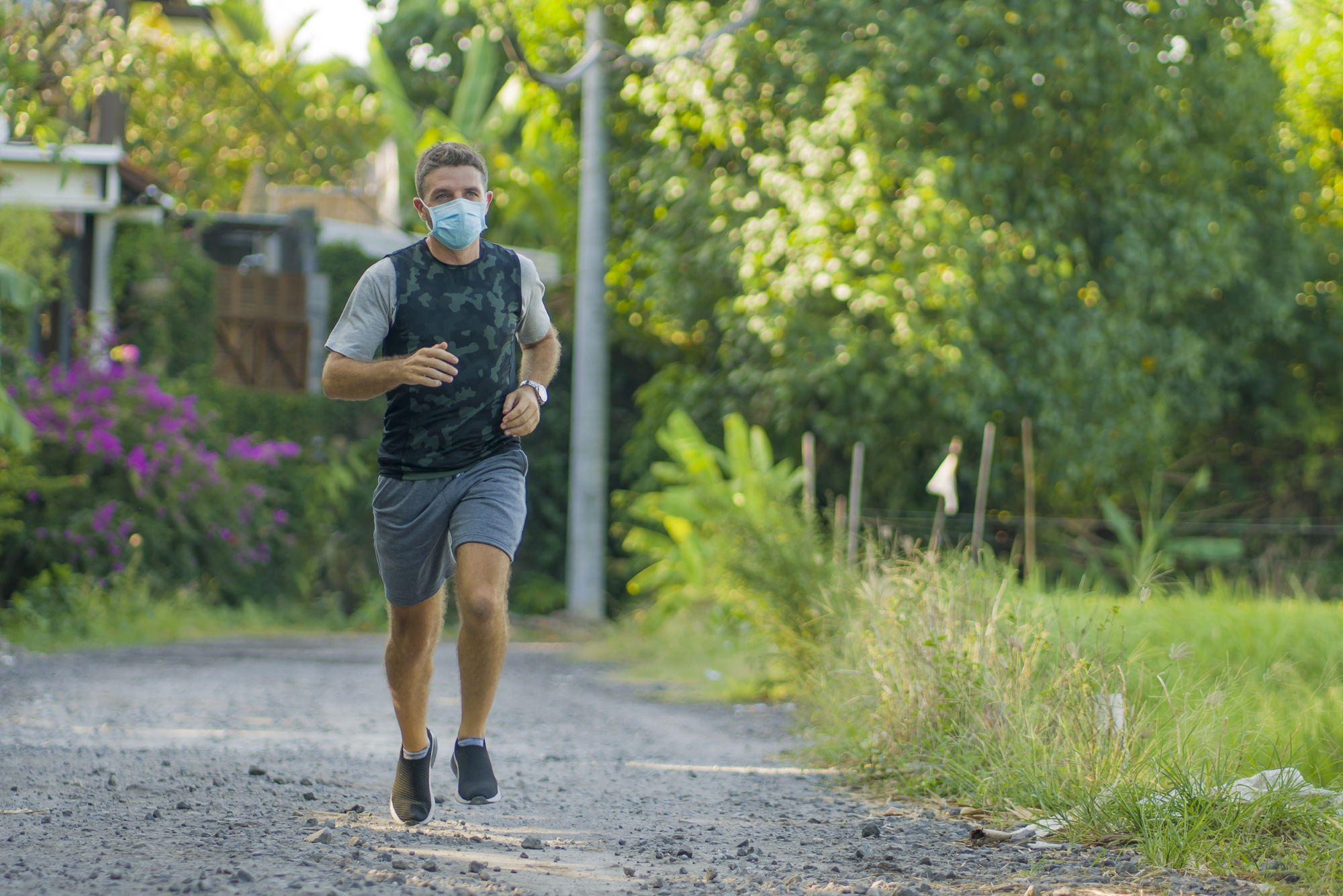
WHAT SHOULD I DO IF I HAD COVID-19?
What virtually all studies agree on is that, for recreational athletes, a return to sports activities should be done gradually and possibly under medical supervision, with periodic testing especially to highlight any cardiac issues. The most recent studies speak of a wait, between remission of symptoms and gradual resumption of activity, of at least ten days, but if you are not a professional athlete and have no particular reason, waiting two weeks will not hurt you; in fact, you will give your body even more time to recover.
When training resumes, try to note down at least four indicators:
- the
sweating
; - lo
perceived effort
; - the
time
necessary to return to a
normal breathing
and to your
usual number of heartbeats
; - l’
intensity of muscle discomfort
post-exercise.
If during activity you feel something is wrong, stop and consider getting another checkup with your doctor before starting again. In the past few months, the Ministry of Health has compiled a list of expedients that Sports Physicians must consult when issuing a medical certificate for the activity of athletics, going to evaluate many aspects and giving us a fair amount of peace of mind to start doing our sports again and have fun. If you also do not plan to participate in any competitions or do not want to engage in competitive sports, investing a few tens of euros for a
visit of this kind,
is definitely money well spent.
I AM VACCINATED, WHAT ARE MY RISKS?
This is the classic million-dollar question. There are still few studies concerning the consequences of the vaccine on athletic performance. There are two reasons for this: there are many vaccines available (the most widely used are 6, but there are at least 3 more in advanced testing) and they use different mechanisms of action (at least 4) to do the same thing, i.e., to make our bodies think we have come in contact with SARS-Cov-2 and make it produce antibodies. Putting together a unique set of analyses for so many combinations is quite complex and is currently a job that no one has done. The second reason is that, if one excludes – data in hand – side effects ascribable to those of any other vaccine, post-administration recovery is very fast, and those who are vaccinated in a couple of days return to normal life and sports activities without obvious difficulty, so, lacking
a casuistry
– i.e., those who complain of adverse vaccine effects under certain conditions-it is not possible to collect data that would make the studies repeatable and verifiable. In fact, the scientific community agrees that it is plausible, lacking data on adverse reactions and having administered billions of doses, that the effects on performance due to the vaccine (whether adverse or favorable) are negligible.
Happy running, RunLovers!
main image credit: Galitskaya on DepositPhotos.com
Bibliografia parziale

Circolare sulle procedure per l’idoneità sportiva del Ministero della Salute Italiano, 2021.
“COVID-19 vaccination in athletes: ready, set, go…” di Hull et al., 2021.
 “Evaluation forMyocarditis in Competitive Student Athletes Recovering From Coronavirus Disease 2019 With Cardiac Magnetic Resonance Imaging“ di Jitka Starekova et al., 2021.
“Focal Myocarditis after Mild COVID-19 Infection in Athletes“ di Udelson et al., 2021.
“Return to Play for Athletes After COVID-19 Infection“ di Hull et al., 2021.
“Clinical patterns, recovery time and prolonged impact of COVID-19 illness in international athletes: the UK experience“ di Hull et al., 2021.
“Prevalence of Inflammatory Heart Disease Among Professional Athletes With Prior COVID-19 Infection Who Received Systematic Return-to-Play Cardiac Screening“ di Martinez et al., 2021.
“Prevalence of Clinical and Subclinical Myocarditis in Competitive Athletes With Recent SARS-CoV-2 Infection“ di Daniels et al., 2021.
“Covid-19 and the impact on young athletes“ di Fitzgerald et al., 2021.