
Afterexplaining how, what, and how much to eat for breakfast, lunch, and dinner, today it is the turn of a topic close to the hearts of athletes: supplements, particularly protein.
Protein is critical for speeding up muscle recovery. Until a few years ago, protein preparations were excessively pasty and caused annoying gastro-intestinal “side effects.” Today, however, there are many highly soluble, palatable and digestible products on the market.
For the amateur runner (up to 3 hours per week), the protein requirement is not much different from that of a “non-runner” and is 0.8-1 g/kg die. For a professional athlete or in any case for those who train for more than 10 hours per week, the protein intake must necessarily be higher.
According to ACSM, the American College of Sports Medicine, an “advanced” runner should consume between 1.2 and 2 g of protein/day depending on training load(Nutrition and Athletic Performance, Joint Position statement, America Journal of Sports Medicine 2016).
Once you have identified the protein requirements you need for your workouts, you should ask yourself what type of protein to take. In fact, not all protein sources are equivalent to each other.
Protein supplements available on the market offer various powder preparations, consisting of isolated protein sources (whey, casein, egg, soy) or blends (blends). Identifying appropriate protein intake patterns (frequency of intake and amount) requires careful planning of training goals, effective timing of sessions, and consideration that not all protein supplements are the same. Commercially available preparations differ in raw material, purification process, quality and amino acid profile[Kreider et al., 2010]. Nevertheless, the sports nutritionist should consider the subject’s total energy intake, carbohydrate intake, and training timing.
Whey protein
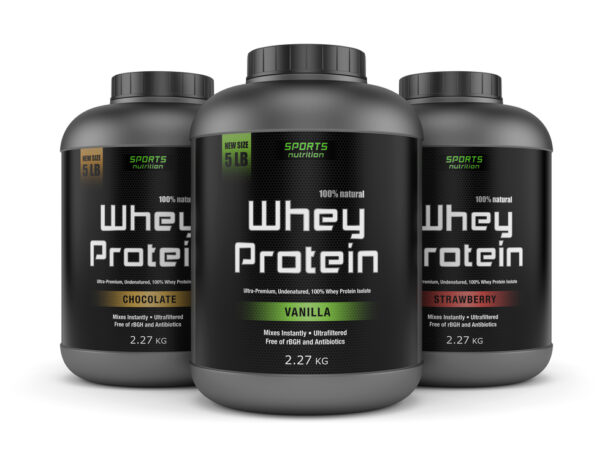
Whey protein, also called Whey Protein/WP, is commercially available as protein concentrate (70-80% protein, WPC), protein isolate (90% protein, WPI) or hydrolyzed protein (90% protein, WPId). The differences between these three forms depend not only on industrial processing and the amino acid profile represented in them (essential and branched amino acids), but also on their lactose and fat intake[Hulmi et al., 2010; Kreider et al., 2009].
WPs, compared with casein or other protein sources, tend to be digested more quickly [Kreider et al., 2009; Tipton et al., 2004; Mahé et al., 1991] and this characteristic allows for a rapid increase in circulating amino acids (leucine in particular) as well as their subsequent muscle incorporation, which provides an important stimulus for protein synthesis [Dangin et al., 2001; Tipton et al., 2004; Kreider et al., 2009; Philips et al., 2009; Phillips, 2014]. The estimated absorption rate for whey protein is about 10 g/hour. At this rate, two hours are sufficient for a 20 g dose of WP to be absorbed. Some scholars have also postulated the so-called “leucine trigger” theory that leucine plays a leading role in regulating muscle protein synthesis. Numerous physiological and pathological conditions could “shift” the threshold of muscle sensitivity to leucine. Furthermore, the more leucine-rich a protein source is, the more anabolic it can be considered for the purpose of muscle trophism[Phillips, 2014]. Whey protein would therefore have the greatest anabolic effect overall both by virtue of its better assimilation and by virtue of its higher leucine content than other preparations.
Casein
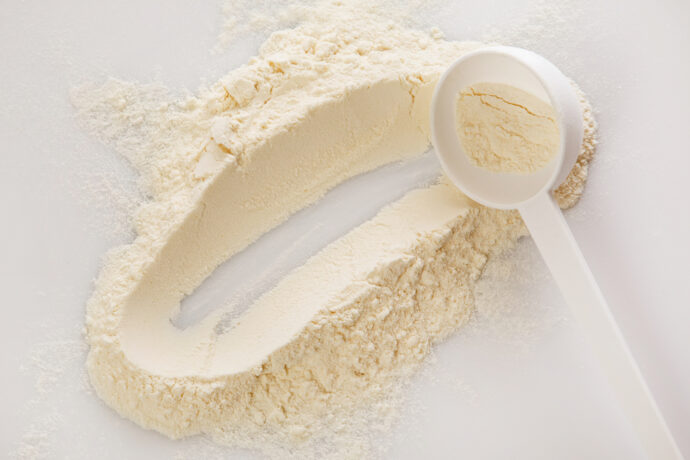
Casein is contained in milk and is obtained by separating it from lipids, lactose, and whey proteins by ultrafiltration and microfiltration processes. It can be found commercially in the form of calcium caseinate, sodium caseinate, potassium caseinate and hydrolyzed casein[Kreider et al., 2009]. Casein is, by definition, a slow-absorption protein. This characteristic is inherent in its ability to coagulate within the gastric environment. This property makes the digestion of casein slower than that of WPs, the release of amino acids into the circulation is therefore markedly reduced[Tipton et al., 2004; Mahe et al., 1996]. Because of its known anti-catabolic peculiarities[Demling et al., 2000], casein is still widely used in sports not only as a single protein, but also (more frequently) in the form of blends in mixing with other protein sources (especially WP) in order to obtain a so-called “time release” product. Such a product should ensure both a fast amino acid release, particularly of leucine (a typical feature of WPs), and a slower, but more time-delayed subsequent release of amino acids (a peculiarity peculiar to casein)[Reidy et al., 2013].
In the next post I will tell you about other proteins you can use to supplement your diet.
main image credit: Miljan. More images: madgooch and AY_PHOTO on DepositPhotos.com
BIBLIOGRAPHY
-
Negro M. et al. CHAPTER 11 INTEGRATORS AND SPORTS SUPPLEMENTS 1 (PLASTICS) in SANIS Handbook pp. 161-164
-
Hulmi JJ, Lockwood CM, Stout JR. Effect of protein/essential amino acids and resistance training on skeletal muscle hypertrophy: A case for whey protein. Nutr Metab. 2010;7(51).
-
Kreider RB, Leutholtz BC, Katch FI, Katch VL. Exercise and sport nutrition. Santa Barbara, CA: Fitness Technologies Press; 2009
-
Tipton KD, Elliott TA, Cree MG, Wolf SE, Sanford AP, Wolfe RR. Ingestion of casein and whey proteins result in muscle anabolism after resistance exercise. Med Sci Sports Exerc. 2004;36:2073-81.
-
Mahé S, Messing B, Thuillier F, Tome D. Digestion of bovine milk proteins in patients with a high jejunostomy. Am J Clin Nutr. 1991;54(3):534-8.
-
Dangin M, Boirie Y, Garcia-Rodenas C, Gachon P, Fauquant J, Callier P, et al. The digestion rate of protein is an independent regulating factor of postprandial protein retention. Am J Physiol. 2001;280(2):E340-8.
-
Phillips SM, Tang JE, Moore DR. The role of milk- and soy-based protein in support of muscle protein synthesis and muscle protein accretion in young and elderly persons. J Am Coll Nutr. 2009;28(4): 343-54
-
Phillips MS. A brief review of critical processes in exercise-induced muscular hypertrophy. Sports Med. 2014;44 Suppl 1:S71-7
-
Mahe S, Roos N, Benamouzig R, Davin L, Luengo C, Gagnon L, et al. Gastrojejunal kinetics and the digestion of [15 N] beta-lactoglobulin and casein in humans: the influence of the nature and quantity of the protein. Am J Clin Nutr. 1996;63(4):546-52.
-
Demling RH, DeSanti L. Effect of a hypocaloric diet, increased protein intake and resistance training on lean mass gains and fat mass loss in overweight police offi cers. Ann Nutr Metab. 2000;44(1):21-9.
-
Reidy PT, Walker DK, Dickinson JM, Gundermann DM, Drummond MJ, Timmerman KL, Fry CS, Borack MS, Cope MB, Mukherjea R, Jennings K, Volpi E, Rasmussen BB. Protein blend ingestion following resistance exercise promotes human muscle protein synthesis. J Nutr. 2013;143(4):410-6.
-
Driskell JA, Wolinsky I. Energy-yielding macronutrients and energy metabolism in sports nutrition. New York: CRC Press; 1999.
-
Bos C, Metges CC, Gaudichon C, Petzke KJ, Pueyo ME, Morens C, et al. Postprandial kinetics of dietary amino acids are the main determinant of their metabolism after soy or milk protein ingestion in humans. J Nutr. 2003;133(5):1308-15.
-
Fouillet H, Mariotti F, Gaudichon C, Bos C, Tomé D. Peripheral and splanchnic metabolism of dietary nitrogen are differently affected by the protein source in humans as assessed by compartmental modeling. J Nutr. 2002;132(1):125-33.
-
Fouillet H, Mariotti F, Gaudichon C, Bos C, Tomé D. Peripheral and splanchnic metabolism of dietary nitrogen are differently affected by the protein source in humans as assessed by compartmental modeling. J Nutr. 2002;132(1):125-33.
-
Pino AM, Valladares LE, Palma MA, Mancilla AM, Yáñez M, Albala C. Dietary isofl avones affect sex hormone-binding globulin levels in postmenopausal women . J Clin Endocrinol Metab. 2000;85(8): 2797-800.
-
Messina M., Soy and Health Update: Evaluation of the Clinical and Epidemiologic Literature, Nutrients 2016, 8, 754; pp. 1-42, doi:10.3390/nu8120754
-
Sathyapalan T et al, The effect of soy phytoestrogen supplementation on thyroid status and cardiovascular risk markers in patients with subclinical hypothyroidism: a randomized, double-blind, crossover study,
J Clin Endocrinol Metab.
2011 May;96(5):1442-9. doi: 10.1210/jc.2010-2255. Epub 2011 Feb 16. -
Rosenberg Zand RS, Jenkins DJ, Brown TJ, Diamandis EP. Flavonoids can block PSA production by breast and prostate cancer cell lines. Clin Chim Acta. 2002;317(1):17-26.