
In today’s running shoe landscape, comfort and performance are no longer opposites. In fact, the most advanced models blend the two seamlessly to support runners through every stage of the run—from that first toe-off to post-workout recovery.
If you want a shoe that helps you run better, longer, and with fewer injury risks, you need to look at a handful of technical factors. Here’s a breakdown of what really matters.
1. Cushioning: Protection and Energy Return
A good cushioning system has two jobs: protect your joints from impact and give energy back. It needs to absorb the force of each landing and turn it into forward momentum. The best materials—like advanced EVA foams, PEBA, PEBAX, or proprietary blends—manage to be lightweight, elastic, and durable all at once.
Too much softness tends to waste energy and can throw off your stride. On the flip side, overly stiff cushioning tires out your muscles and tendons. The sweet spot? A responsive foam that adapts to your mechanics and the kind of run you’re doing.
2. Functional Stability
Stable doesn’t mean stiff. Functional stability comes from a mix of things: a wide enough landing base, geometry that guides your foot through its natural motion, and an upper that supports without locking you in.
This becomes even more critical on long runs, when form breaks down and your feet need more guidance to stay aligned.
3. Outsole Geometry and Rocker
Outsole design plays a huge role in how efficiently you run. A rocker—an upward curve at the toe—helps your foot roll forward more smoothly and eases the heel-to-toe transition. It reduces muscle strain and shortens ground contact time, making your stride feel more fluid.
Also key is the drop: the heel-to-toe offset. Most neutral shoes fall between 6 and 10 mm, which tends to work well for a wide range of runners.
4. Upper: Support, Breathability, Comfort
The ideal upper strikes a balance between lightweight, structure, and ventilation. It should hold your foot securely throughout your stride without creating hot spots or pressure points. The best designs use engineered mesh reinforced where needed, often with integrated lacing systems that keep everything snug without shifting inside the shoe.
5. Overall Weight
Weight matters—especially depending on how you’ll use the shoe. For long-distance training, a shoe should stay under 300g (men’s size EU 42) while still offering enough cushioning and support. Anything too heavy tires you out faster and can mess with your cadence.
A Real-World Example: Under Armour Infinite Elite 2
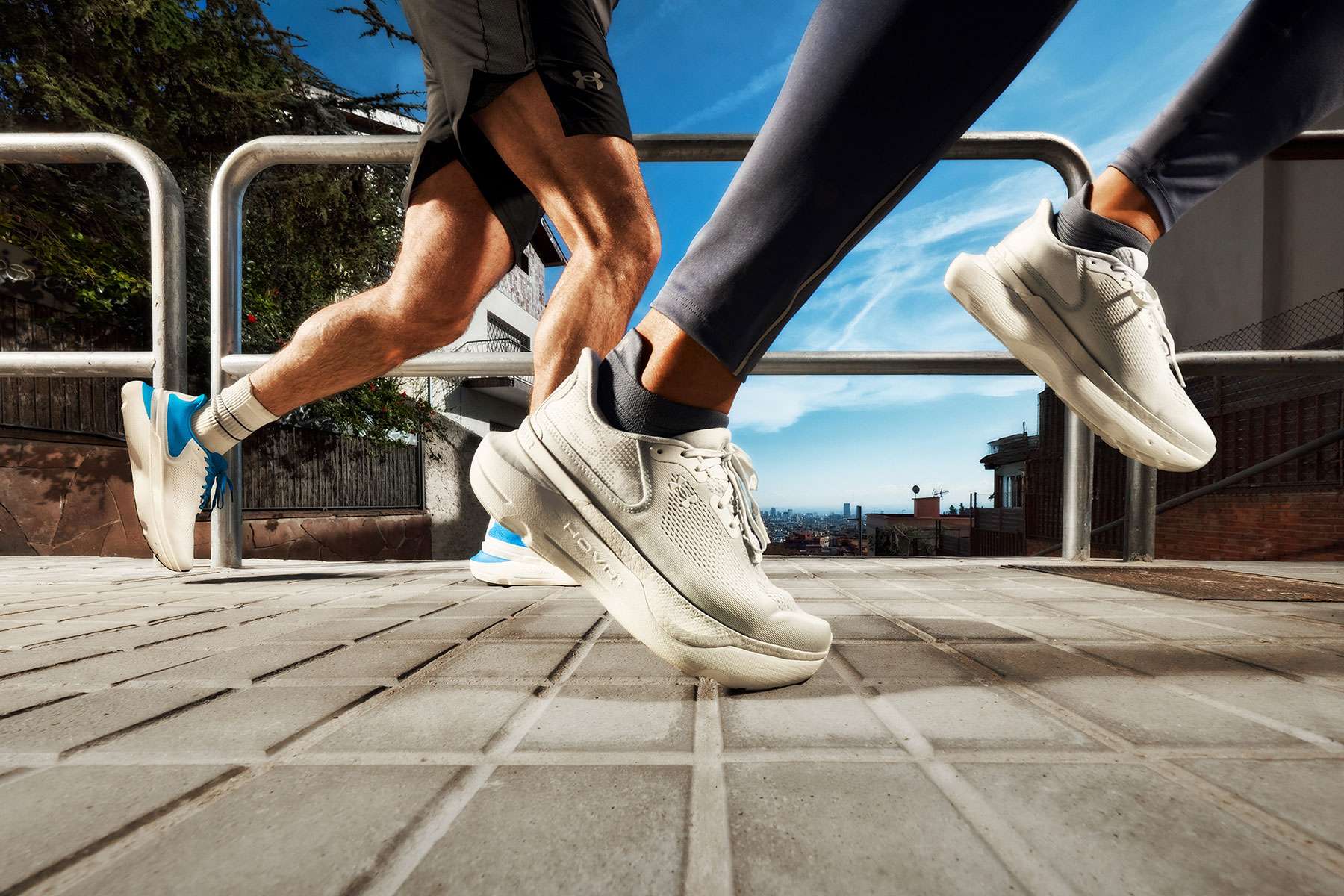
Among the many models out there, the Under Armour Infinite Elite 2 stands out as one that checks all the right boxes. Designed for daily training and long-distance sessions, but without giving up on responsiveness, it’s the most advanced cushioning shoe in the brand’s lineup.
UA HOVR+ Cushioning
The centerpiece here is the new UA HOVR+ foam, a step up in both bounce and lightness from the previous version. It’s engineered to deliver consistent energy return while absorbing impact vibrations. The result is progressive cushioning that stays reliable mile after mile.
Stability and Support
The outsole is wide and geometrically designed, featuring a reinforced heel that reduces lateral movement and boosts overall stability. While technically a neutral shoe, its structure is protective and built to keep you aligned—even when fatigue kicks in.
Geometry and Rocker
A pronounced rocker shape makes transitions smoother and more efficient. You feel it especially on longer runs, where it helps you save energy and maintain rhythm.
Warp 2.0 Upper
The upper uses Warp 2.0 technology, a technical fabric that offers dynamic lockdown, breathability, and lightness. Strategic support bands adapt to your foot’s motion, minimizing friction and eliminating pressure points.
Weight and Drop
It keeps weight in check—around 290g for the men’s version—and the drop is 8 mm (with 36 mm of stack height at the heel and 28 mm at the forefoot), making it a well-balanced choice for most runners.
Bottom line: if you’re looking for comfort and performance rolled into one, the Infinite Elite 2 is a strong contender. It delivers everything you need to tackle long runs with efficiency and confidence—without compromising on responsiveness, protection, or lightness. A solid, detail-focused option for runners who want their gear to go the distance with them.
In short? Definitely worth trying on.