
To run well in winter, the secret is “layering”: dressing in 3 layers (base, mid, shell) to stay warm, dry, and protected, avoiding the common mistake of overdressing.
- Mistake #1: Overdressing. The body produces heat; overdressing makes you sweat, sweat freezes, and you end up colder.
- The Golden Rule: Dress in 3 layers (Layering), each with a specific function: breathability, insulation, protection.
- Layer 1 (Base Layer): In contact with the skin. Must be technical and breathable (NEVER cotton) to wick away sweat.
- Layer 2 (Mid Layer): Serves to insulate and retain body heat. A vest or long-sleeved technical shirt is ideal.
- Layer 3 (Shell Layer): Serves to protect from wind and rain or snow. Must be a lightweight, protective, and ideally reflective shell.
- Legs and Extremities: Don’t forget technical tights, socks, gloves, and a hat to protect the most exposed parts.
The Mistake We All Make
When we look out the window and see the cold, our primal instinct screams at us to protect ourselves. The reaction is simple: we cover up. A lot. We bundle up in heavy clothes, padded jackets. And then we go out for a run.
And, after ten minutes, we’re sweating like we’re in the tropics. Sweat soaks our clothes. As soon as we stop for a moment at a stoplight, or as soon as a gust of wind hits us, that sweat turns into ice. And suddenly, we’re colder than when we left.
This is the most common mistake of the winter runner. We forgot one thing: while running, we produce an enormous amount of heat.
The true goal of winter clothing isn’t “to keep warm,” but “to manage heat and moisture.” And to do that, there is only one foolproof method: layering.
The Golden Rule: The 3-Layer System
Think of your clothing like an onion, where every layer has a precise mission and works in synergy with the others.
1. The Base Layer: Managing Moisture

This is the layer in direct contact with the skin. Its sole, fundamental task is to move sweat away from the skin and transfer it to the next layer. It must be a “second skin.”
- What to use: Technical shirts in synthetic fabrics or merino wool. They must be form-fitting. Garments like the ROAD SEAMLESS LS TOP from the NAGINO collection by ASICS are perfect, because the seamless design and lightweight, breathable fabric avoid chafing and manage moisture.
- What NOT to use: Cotton. Cotton absorbs sweat, gets soaked, stays wet, and freezes on you. It’s the best way to get sick.
2. The Mid Layer: Insulating from the Cold

This layer serves to retain the body heat you’ve generated, creating an insulating microclimate. It must be warm, but also breathable, to allow water vapor and sweat coming from the first layer to evaporate.
- What to use: Depending on the cold, it can be a thermal long-sleeved shirt or a padded vest. A vest, like the NAGINO RUN PADDED GILET by ASICS, is often a strategic choice: it protects the “core” (chest and back) from the cold, leaving the arms free to move and release heat.
- What NOT to use: Heavy fleeces or leisure hoodies. They are bulky and hold too much sweat.
3. The Shell Layer: Protecting from the Elements
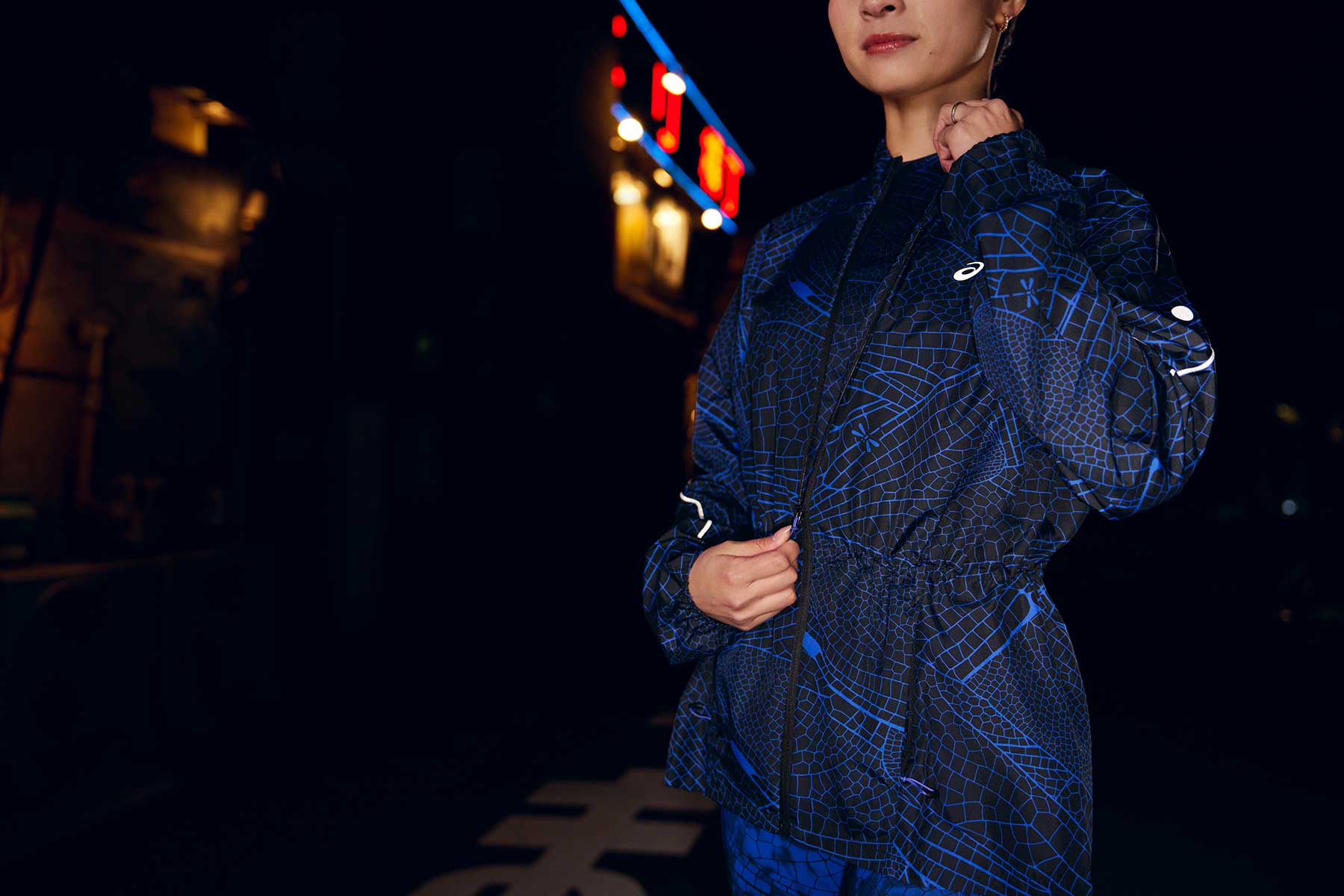
This is your shell, your armor. Its task is to protect you from wind and precipitation (rain or snow), which are the true enemies of the runner because they drastically accelerate heat loss.
- What to use: A light, windproof (wind-stopper), and water-repellent jacket. It doesn’t need to be a mountaineering “shell”; it must be light and packable. Jackets like the ROAD LITE-SHOW PACKABLE JACKET by ASICS are ideal because they offer protection and, as we’ll see, add a fundamental element in winter: visibility.
- What NOT to use: Non-breathable rain ponchos. They create a “sauna effect” that will boil you in your own sweat.
Don’t Forget Legs and Extremities
Obviously, the upper body isn’t everything.
- Legs: A pair of technical winter tights is fundamental. Models like the ROAD LITE-SHOW TIGHT or the NAGINO RUN ADJUSTABLE TIGHT by ASICS offer warmth without bulk, and often have essential reflective details.
- Extremities: Head, hands, and feet are the first to get cold. Invest in technical winter socks (not cotton!), a beanie or headband, and a pair of running gloves.
The Investment That Lasts Over Time
Quality technical clothing costs money, it’s true. But it should be seen as an investment, not an expense. A high-performance technical garment, if treated well, lasts for years. It allows you to run comfortably, safely, and dry, transforming a winter outing from a survival nightmare into an energizing experience. The cold, if dressed correctly, becomes just a detail.