
-
Plantar fasciitis is a common inflammation among runners, often caused by intense training or inadequate shoes.
-
There are clinical remedies to combat it, but you can also try specific exercises to relieve the pain.
-
Without going so far as to get injured, preventing injuries means avoiding overtraining, using the right shoes, taking care of the core, and respecting the warm-up.
Running is beautiful, at least until something goes wrong. Like you get injured, that is, you enter the dark side of running, made up of mishaps that disrupt your routine, sometimes interrupting it altogether. But why do they happen and, more importantly, how can you prevent or deal with them?
Plantar fasciitis
Among the most common problems among runners is plantar fasciitis, an inflammation of the plantar fascia, that is, the band of tissue that runs along the sole of the foot. Fasciitis pain is most noticeable near the heel or in the midfoot and is most noticeable when the foot “is cold,” that is, when muscles and tendons have been stationary for a while. In fact, it is no accident that it gives more discomfort in the morning and deceives instead after a run, when it usually disappears, precisely because the foot has warmed up. An easy way to tell that you are prone to it is precisely the pain you feel when you wake up, when you first place your foot on the ground, and generally during the first few steps of the day, which can feel like an ordeal. But what causes it? It can result from several factors, including:
- Wrong shoes, that is, those that do not provide the right support.
- Overly intense workouts, perhaps without adequate recovery, and straining the foot, every part of it, as a result.
- Inefficient biomechanics, which can then generate imbalances in the distribution of forces transmitted from the road to the body, perhaps due to improper foot support.
The good news? It’s not the end of the world, and there are ways to ease the pain and get back to running.
Clinical remedies to get back on track
If plantar fasciitis is driving you crazy, a medical consultation is always the best idea and may direct you toward therapies, such as:
- Physical therapies, such as massage or ultrasound, to reduce inflammation.
- Anti-inflammatory drugs prescribed to relieve acute pain.
- Orthopedic orthotics, which help to better distribute weight on the foot.
For more complex cases, more specific intervention may be needed, but often the problem is solved with less invasive approaches.
The Way of Exercise
Before seeking specialized medical attention, it is a good idea to evaluate your reaction to doing certain exercises, especially when the pain is present but not unbearable. There are seven of them and they include stretching and strengthening movements.
1. Extension of the fingers in a sitting position
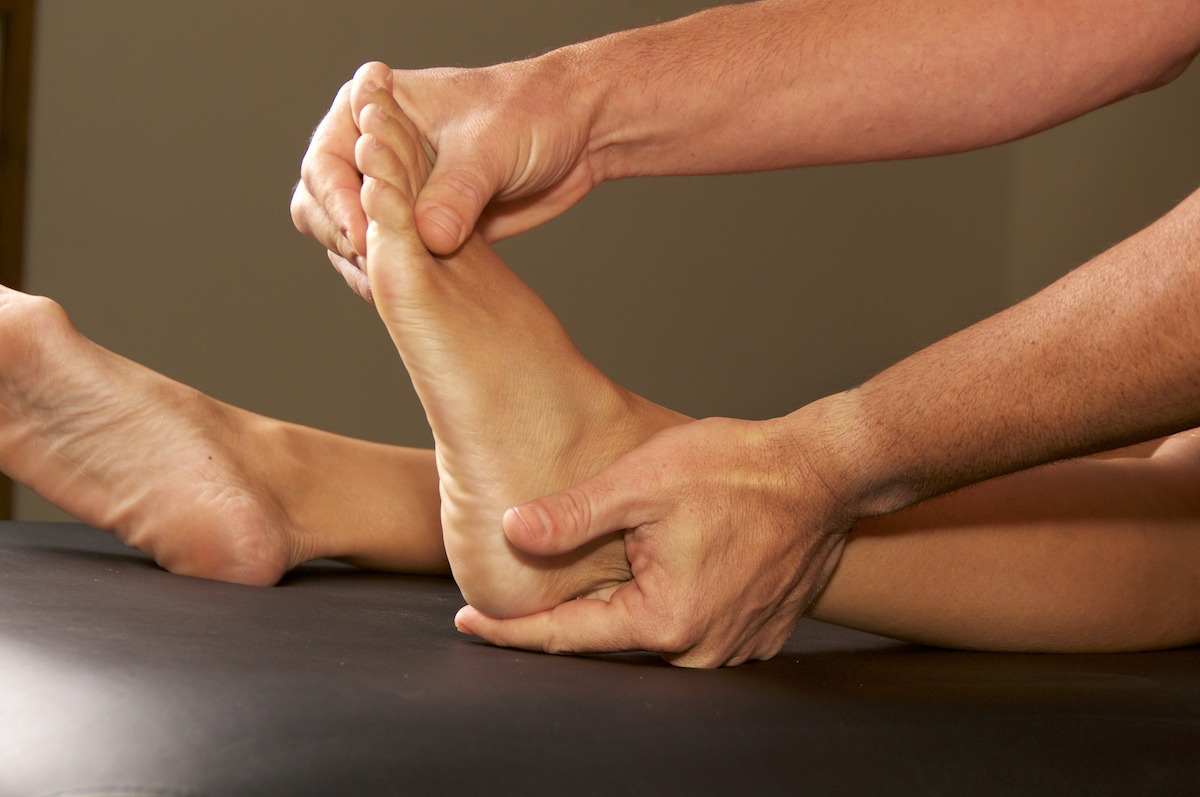
This exercise is used to strides the plantar fascia under the foot, relieving pain. What you need: a comfortable chair. Execution
Sit in a comfortable chair and rest the ankle of the foot that hurts on the opposite thigh. With your foot in a flexed position, pull your toes with your hand toward you, also dragging your foot, until you distinctly feel a stretch between your feet. Hold the position for about 30 seconds. Switch sides. Repeat 2-3 sets per foot each day or before and after activities that require movement.
2. Extension of the fingers in an upright position
A wall holds up a house but can also be used to rest your fingertips on it to do this exercise.
What you need: a wall.
How to do it
Facing the wall, rest the toes of your right foot and place your left foot about a foot behind you. Bend your right knee and gently push against the wall with your big toe to strides the sole of your right foot. Stay like this for about 30 seconds, then switch sides. Repeat 2-3 sets per foot each day or before and after activities that require movement.
3. Stretching with towel or plantar fascia
A towel is used to dry you off but also as a non-stretching band to pull your toes toward the shinbone. As in other cases, the purpose is to stretch the sole of the foot and reduce the tension induced by plantar fasciitis. It also helps relax the muscles in the back of the leg.
What you need: a towel or elastic band and a comfortable place to sit on the floor.
How to do it
Sit on the floor with your right leg extended. Keep your leg straight and flex your right foot upward. Wrap a towel or band around the arch of your right foot and gently pull the ends to bring your toes toward your nose. Hold the position for 10 to 15 seconds, then release. Switch sides. Repeat 5-10 times per foot each day.
4. Standing gastrocnemius stretch

The intensity of pain caused by plantar fasciitis can be accentuated by stiffness in the calf muscles. This exercise is precisely to stretch the calf.
What you need: a wall.
How to do it
Standing in front of a wall, arm’s length apart, open your feet to the width of your hips. Place your hands on the wall. Bring your left foot back. Bend your right knee and tilt your body toward the wall, keeping your back leg straight and your heel on the ground. Hold the position for about 30 seconds, then switch sides. Repeat 5-10 times per foot each day.
5. Standing soleus stretch
Similar to the previous one, but bending the back knee to focus on the soleus, another important calf muscle.
What you need: a wall.
How to do it
Stand in front of the wall, arm’s length apart. Place your hands on the wall. Bring your left foot back and bend both knees, tilting your body toward the wall. Press against the wall to feel the stretch in the lower calf. Hold the position for about 30 seconds, then switch sides. Repeat 2-3 sets per side each day.
6. Stretching the calf on a ladder
Use a ladder to deeply strides the calf muscles and Achilles tendon, thus helping to reduce tension on the plantar fascia.
What you need: a ladder or raised surface.
How to do it
Stand on a step holding your heels overhanging, about the height of the edge. Move your body downward so that your heels are closer to the floor, simultaneously stretching your calves. Hold the position for 10 to 15 seconds. Then bend your knees slightly to feel the stretch on the soles of your feet. Repeat 5-10 times each day.
7. Rolling of the plantar arch
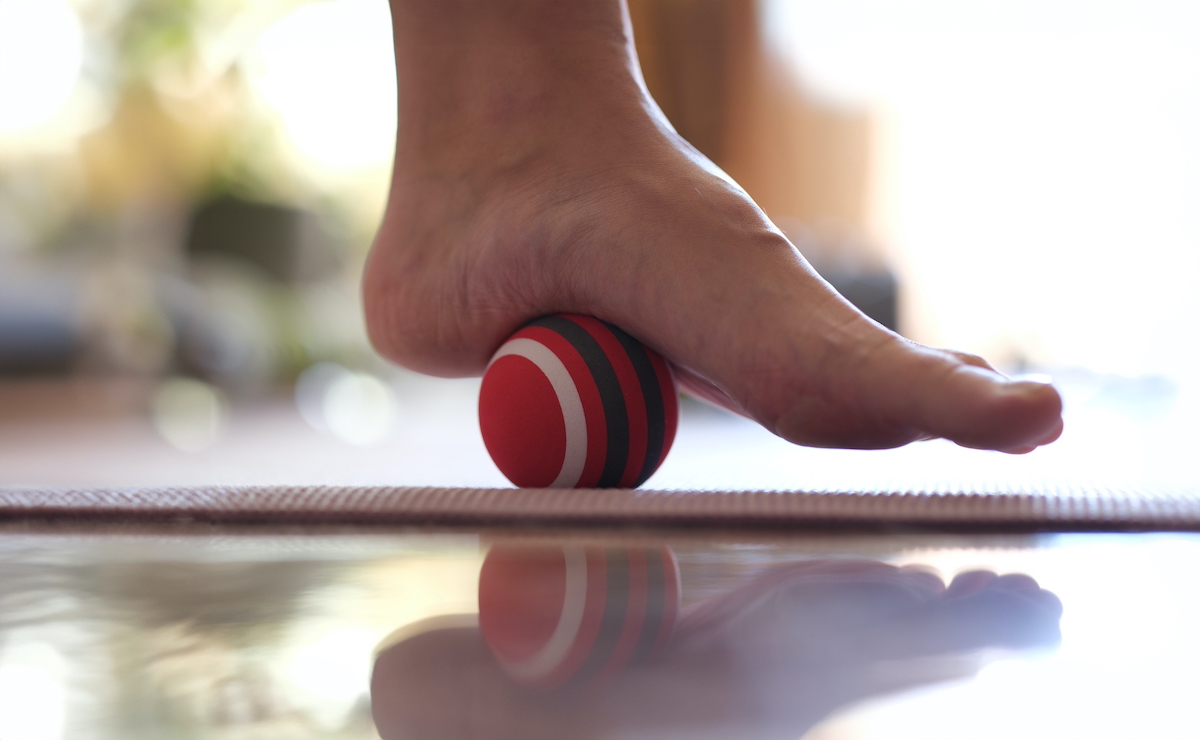
Similar to a self-massage, this exercise helps you relax tension under your feet. What you need: a ball (tennis or golf), or a foam roller (foam roll), a frozen water bottle, and a chair. Execution
Place one of these objects (just one! ;)) on the floor under the arch of your right foot. Slowly roll your foot back and forth, covering the entire sole from toes to heel. Repeat 20 times, then switch feet. Perform this exercise every day.
Prevention: your best ally against injury
Prevention is the real key to avoiding injuries that force you to stop. Here are some key cautions:
- Don’t overtrain.
Overtraining is often at the root of many physical problems. Gradually increase the load and listen to your body. - Choose suitable shoes. Not all shoes are the same, and the right model depends on your biomechanics and the surface you run on.
- Work on the core. A stable core musculature improves posture and reduces the load on joints.
- Don’t neglect warming up and defocusing. Just 10 minutes before and after each run is enough to improve circulation and prepare muscles.
Injuries are a setback, but also an opportunity to learn to take better care of yourself. Plantar fasciitis can be very bothersome but, as seen, it can be alleviated or treated with some targeted exercises in milder cases or with therapies performed in specialized centers after proper medical consultation. (via Everyday Health)