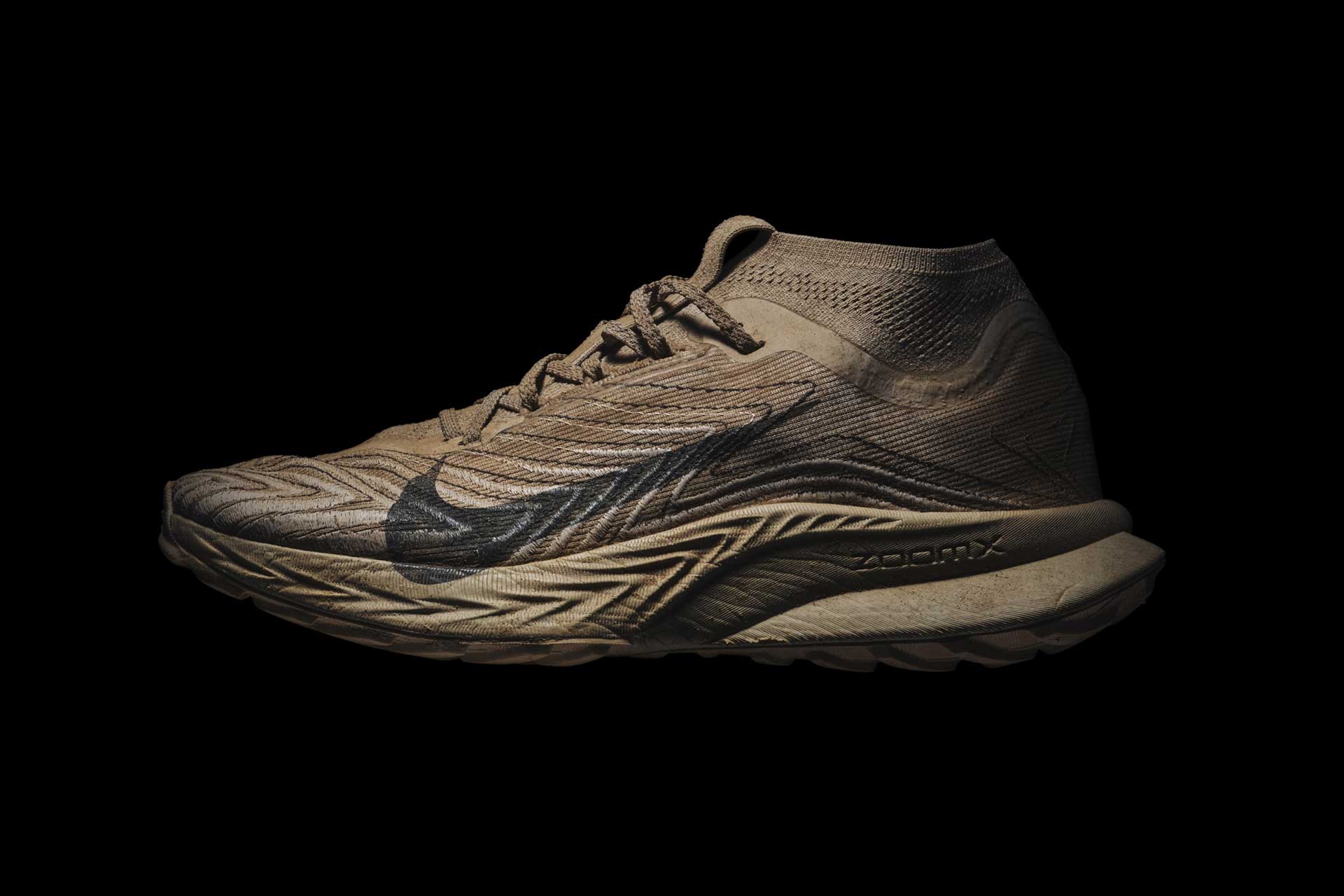
ACG brings a race collection to Chamonix camouflaged in Mont Blanc geology, plus a shoe that already collected podiums before anyone was allowed to see it.
- Chamo Camo is a camouflage pattern built by studying the granite, limestone, sandstone, forests and lichens along the Mont Blanc loop.
- The print covers the kit worn by All Conditions Racing Department athletes and a retail collection of apparel plus five trail shoes.
- The Kigerfly went public after months of racing as a prototype: ACG released the athletes’ story and pushed the technical specs to early 2027.
- The collection is on Nike.com from July 23 and at select ACG retailers from July 30.
At 5:45 p.m. on August 28, the UTMB — the Ultra-Trail du Mont-Blanc — leaves Chamonix: 174 km (108 miles) and 9,900 m of vertical gain, about 32,500 feet, around the massif. On the start line there will be shoes and shirts wearing a pattern pulled from the rock those runners will cross over the next forty hours. It’s called Chamo Camo, it’s the race collection from Nike ACG — All Conditions Gear — and it reached the valley a few weeks ahead of the field.
Alongside the collection, ACG showed the Kigerfly for the first time, a trail shoe that raced in prototype form for months before anyone saw it in its finished shape.
A Camouflage Built From Mont Blanc Geology
Look at a granite face at seven in the morning, then look again mid-afternoon: the tone has shifted, the shadows have swapped sides. A camouflage pattern designed for a course run from dawn to dusk and into the next dawn has to hold up across every version of the same stone.

ACG’s designers worked from the textures, colors and shadows of the granite, limestone and sandstone formations that make up the route, and from the spruce and pine forests lining it. What came out is a layered camouflage, built by overlap rather than flat blotches. The way nature solves the same problem fed the project too: wildlife, vegetation and the lichens that dissolve into whatever they’re growing on.
Patrick Montoya, ACG Apparel Senior Manager, traces the idea back to the dynamics of long races — a rolling contest, as he describes it, between the runner chasing and the runner being chased, where an athlete wants to move unnoticed and keep attention on the ground underfoot.
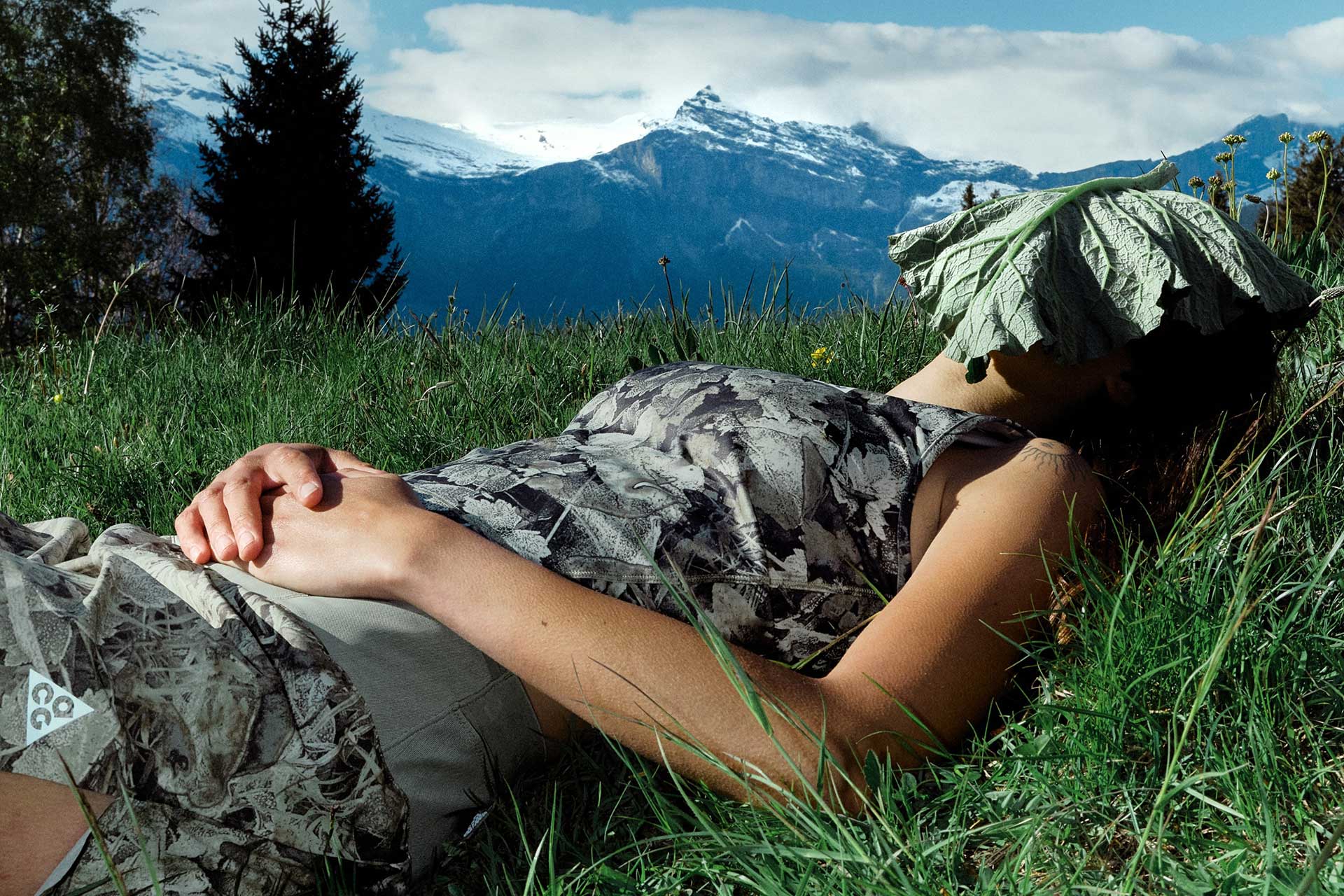
Worth saying plainly: during the one week when the Chamonix valley floor becomes the most photographed place in trail running, disappearing isn’t on the table. Bibs are numbered, trackers broadcast live positions, camera crews own the cols. Camouflage here works more as a declaration of belonging to a specific piece of terrain than as concealment, and it fits a trend that’s been building for several seasons now — outdoor apparel trading bright colors for mineral tones. It’s also why the pattern reads so well in race imagery, where the athlete has become a silhouette inside a landscape.
What’s in the Collection
The All Conditions Racing Department kit covers the full race day: the Dri-FIT ADV Distance tank and short-sleeve tee for running, a dedicated warm-up shirt, short tights for women and mid-thigh tights for men, race shorts. The Dri-FIT ADV Distance Airborne and the Aero-FIT Radical AirFlow round out the setup.
The part you can actually buy is narrower. For women, a Dri-FIT trail running tank and shorts with a built-in liner, plus an ACG graphic tee; for men, the Dri-FIT ADV “Solar Chase” shirt, 6-inch shorts with a built-in liner and the same graphic tee. The pattern then dresses five shoes already in the catalog: ACG Ultrafly Trail, ACG Zegama Trail, ACG Pegasus Trail, Wildhorse and Terra Kiger.
The collection is available on Nike.com from July 23 and at select ACG retailers from July 30.
Kigerfly, the Shoe Introduced Backward
A race shoe usually arrives as a spec sheet first and a result second. The Kigerfly ran that sequence in reverse: All Conditions Racing Department athletes spent months competing in an unannounced prototype, standing on podiums in a model nobody could identify. It’s the automaker method — take a car to the track wrapped in black film, win the race, publish the numbers a year later.
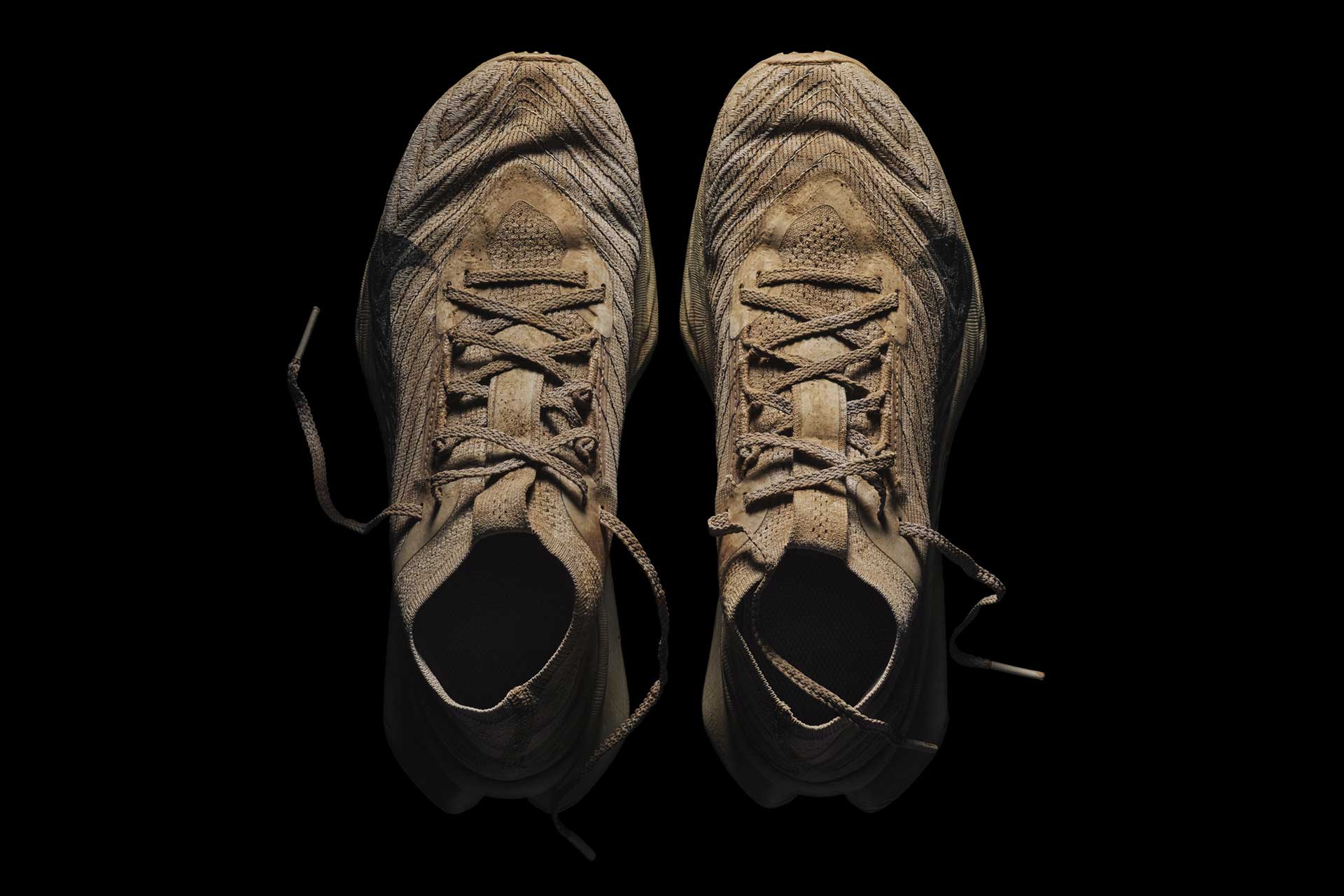
The story released with those first images is almost entirely about the athletes. The climbs that stressed the shoe, the descents, the feedback gathered race after race and sent back to the designers, the changes made between one start line and the next. The prototype, ACG says, was built in the mountains rather than tested in them.
The technical deep dive is slated for early 2027, and until then the Kigerfly will stay visible mostly on the feet of whoever is running up front.
The verdict at this stage is about the method. A podium is evidence no spec sheet can supply: it says the shoe held together in a real race, under a real athlete, on terrain that doesn’t forgive.