
Nike has organized its racing shoes around the race you’re training for: Swooshfly to get started, Alphafly 4 for a marathon PR, Apex for runners fighting for seconds.
- How Nike reorganized its racing lineup, and the question it started from
- Swooshfly: where it comes from, what changes in the plate and why it’s aimed at four-and-a-half-hour marathoners
- Alphafly 4 at a glance, with Nike’s data against the previous model
- Apex: four Air Zoom units and a zero-drop platform, explained in plain English
- Release dates and known prices for all three models
For years, racing shoes lined up like the rungs of a ladder: the most accessible at the bottom, the fastest at the top. With Swooshfly, Alphafly 4 and Apex, Nike redraws the lineup around a different question — what race are you training for — because a first marathon and a record attempt ask for very different things underfoot.
A Lineup Built Around Goals
The map is quick to read. Swooshfly is designed for runners tackling their first race or chasing a new goal, anywhere from the 5K (3.1 miles) to the marathon. Alphafly 4 is for runners who want to lower their marathon time. Apex is for those fighting for every second over 26.2 miles.
What shifts from one model to the next is mostly the balance between the midsole foam, which cushions and returns energy, and the carbon fiber plate, which stiffens the shoe and guides your toe-off. Alphafly 4 and Apex add Air Zoom units: pressurized air pockets in the forefoot that compress under load and give it back. In Swooshfly, the work falls to a new foam and a more flexible plate.
Neither Swooshfly nor Apex is on sale yet, which makes this a good moment to understand how the lineup works, so you can choose without rushing when they land.
Swooshfly, the Racing Shoe for Getting Started

Swooshfly is the most interesting shoe in the lineup, because it starts from the problem of the runner who finishes a marathon in four and a half hours, not the one who finishes in two. According to Nike’s data, the average marathon time hovers right around four and a half hours, and a recreational runner covers the 26.2 miles in roughly 55,000 steps, nearly double the 28,000 Eliud Kipchoge needs. That means more than twice as long on the road, with almost twice as many footstrikes to manage.
People at Nike who have spent years working on racing shoes kept hearing the same thing from recreational marathoners: if you’re not used to it, a super shoe feels like it’s the one doing the steering. Think of a car with very quick steering. A race car driver gets back every millimeter of input; a Sunday driver feels the car move a split second before their hands do. Elite racing shoes are built to amplify the forefoot strike, and many recreational runners find them too stiff to control.
Nike’s answer starts with the plate. Alphafly and Vaporfly use eight layers of carbon fiber; Swooshfly has five. In testing at Nike’s Shanghai lab, that was the number testers felt struck the balance between propulsion and control. Three fewer layers might look like a compromise, but in a fast shoe much of the work is done by the midsole, and that’s where the real news is: SkyX foam, made of TPU microspheres — an elastic plastic — steam-treated to create different densities in the heel, midfoot and forefoot, with a heel-to-toe transition designed with heel strikers in mind too. According to Nike, the package returns up to 16% more energy than Vaporfly 4, measured on a men’s US size 10.
The shape is wider through the midfoot and the arch is lower, because runners in the test group reported racing shoes that felt too narrow and irritation under the arch. In the forefoot, GOATEK rubber adds grip near aid stations, where the asphalt gets covered in water and crushed cups and turns slicker by the hour — a detail anyone who reaches the aid stations in the thick of the pack knows well. The idea came from listening to Chinese marathoners, and Nike developed the shoe in about a year, half the time a new model usually takes.
Alphafly 4, for a Marathon PR
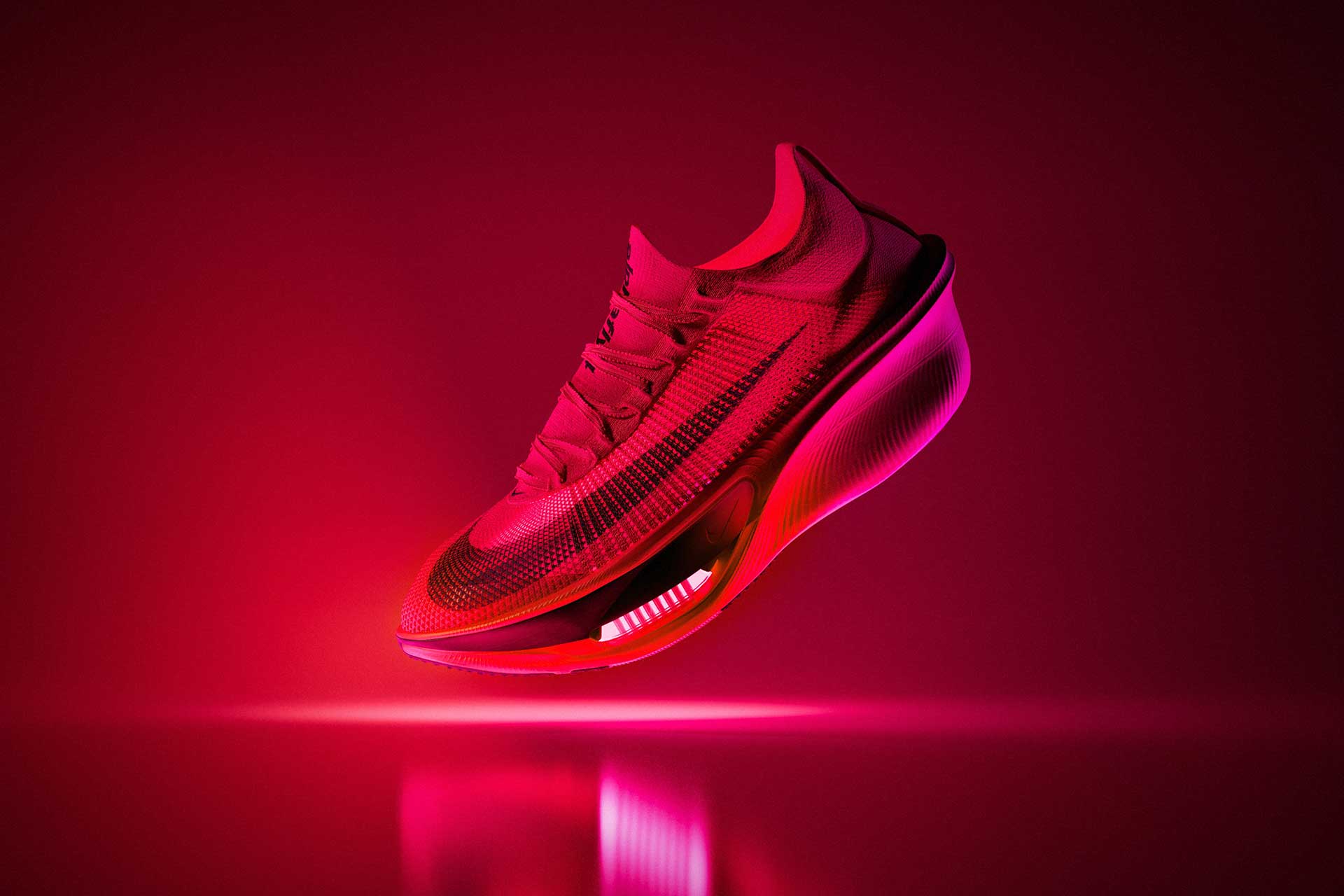
If you already have a marathon behind you and the goal now is a time, the shoe in this lineup is Alphafly 4. Nike built it around the point in a race where holding pace gets harder than finding it. According to Nike’s data, it returns 10% more energy than the previous model and weighs 5% less.
The new ZoomX LT foam sits above and below the carbon plate, two Air Zoom units work in the forefoot, the outsole is Fast Shot and the Atomknit upper is seamless. Compared with Swooshfly, the plate goes back to eight layers, so it’s stiffer, and air enters the forefoot. Alphafly 4’s new Air Zoom unit is also the foundation Apex is built on, where it’s pushed to the extreme.
Apex, for Runners Chasing Every Second
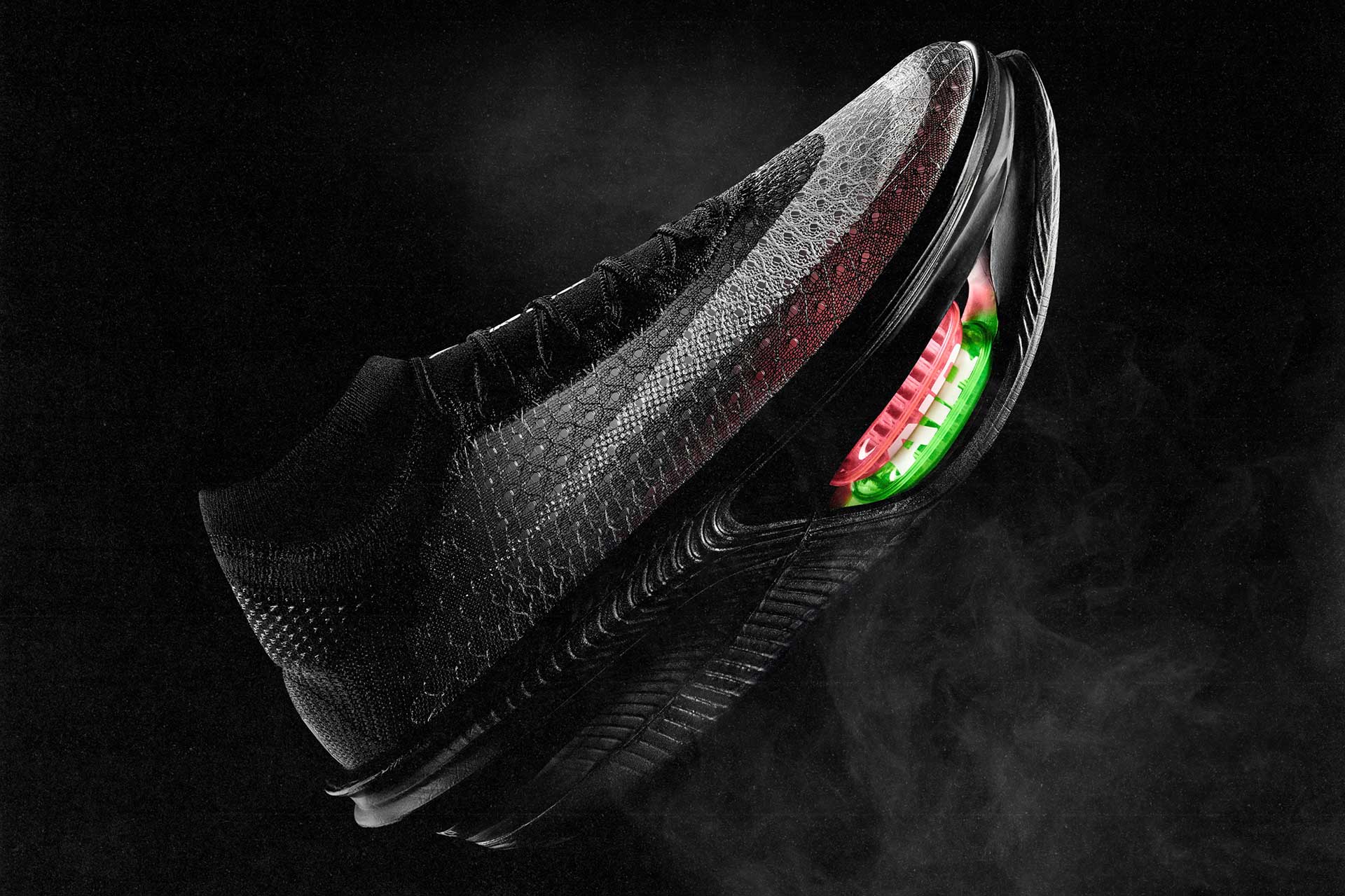
Apex makes the most sense if you start at the forefoot, home to four Air Zoom units arranged in two stacked pairs — the most air Nike has ever put in the front of a running shoe. Above them, an inverted-wave carbon plate is designed to channel load into the air units; underneath sits a layer of ZoomX LT.
The platform measures 40mm at both the heel and the forefoot, the maximum stack height allowed in road racing, and the drop is zero: your foot stays level, the way it does on your kitchen floor, just about an inch and a half higher. The Flyknit X upper has no insole and fits like a glove. According to Nike’s data, energy return is up to 40% higher than Alphafly 3, on a men’s US size 10, with weight down by more than 10%. Jacob Kiplimo has raced in prototypes over the past few months, in some of the biggest races of his career.
What stands out is that both ends of the lineup arrive at the same idea. Kiplimo says the best innovations let you think less about what’s happening underfoot, and Nike writes that Swooshfly should help runners focus less on their shoes and more on the challenge. Nearly two and a half hours apart at the finish line, and both ask the same thing of the shoe.
Release Dates and Prices
Alphafly 4 launched early in a limited edition on September 17 on nike.com. Wider release begins October 29 on nike.com and at select retailers, priced at €279.99 in Europe. Apex arrives in January 2027, with pricing yet to be announced. Swooshfly debuts in China in February 2027 and rolls out worldwide in the spring, at a price Nike has set at $145.